
Pros and Cons of Java | Advantages and Disadvantages of Java
Get Job-ready: Java Course with 45+ Real-time Projects! - Learn Java
Java has been one of the most widespread and most efficient programming languages out there, for a very long time. The reason being that it has many benefits and perks that help programmers solve complex real-world problems with ease. Java has also helped develop various software in the past and still continues to help in development in the present. But, as we know, every coin has two sides; similarly, Java has its fair share of cons as well. In this article, we will discuss all the pros and cons of using Java vividly.
Pros of Using Java
There are many advantages of using Java as a programming language. Let us discuss all these advantages one by one.
1. Java is Simple
A simple programming language is easy to learn and understand. Java, with its straightforward and easy to comprehend codes, is one of the simplest programming languages to learn and implement.
In addition, Java removes all the complex features of C and C++, like pointers, structures, and unions, and makes the implementation of code easier.
2. Java is an Object-Oriented Programming Language
One of the main advantages of Java is that it is an object-oriented programming language. We all know that procedural languages are very complicated and hard to implement. Using the OOPs concept made Java easier to implement and much more secure. OOPs concepts help Java solve real-world problems. It also helps maintain large code by breaking it into smaller, named fragments.
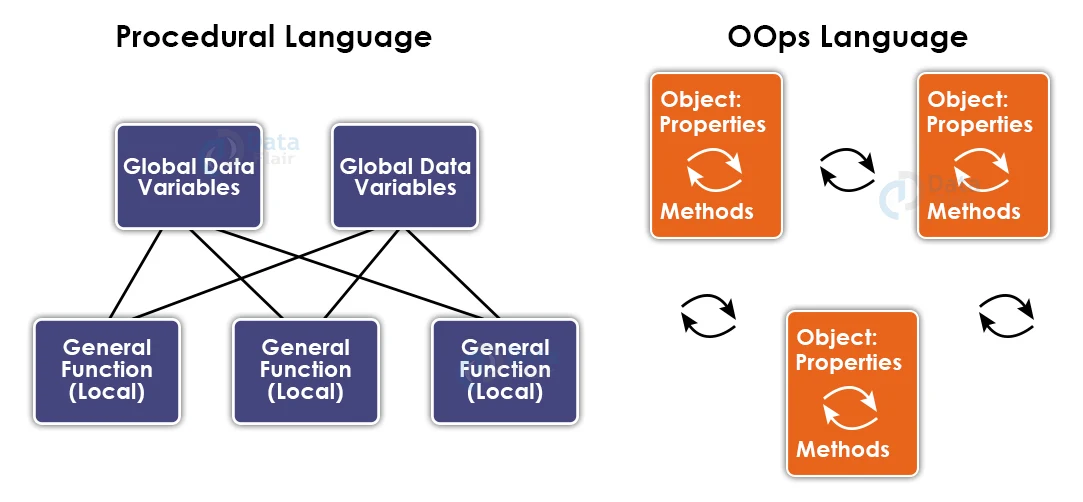
3. Java is a Secure Language
Languages like C and C++ use pointers, which allow access to memory locations. This is a security risk, as pointers can lead to unauthorized memory access. Java also uses OOPs concepts like encapsulation, abstraction, and inheritance, which increase security and prevent unauthorized access to users.
4. Java is cheap and economical to maintain
Due to its simple build, Java is cheap and easy to develop and maintain. Java can run on any machine regardless of the hardware of the system, which reduces the cost of development significantly.
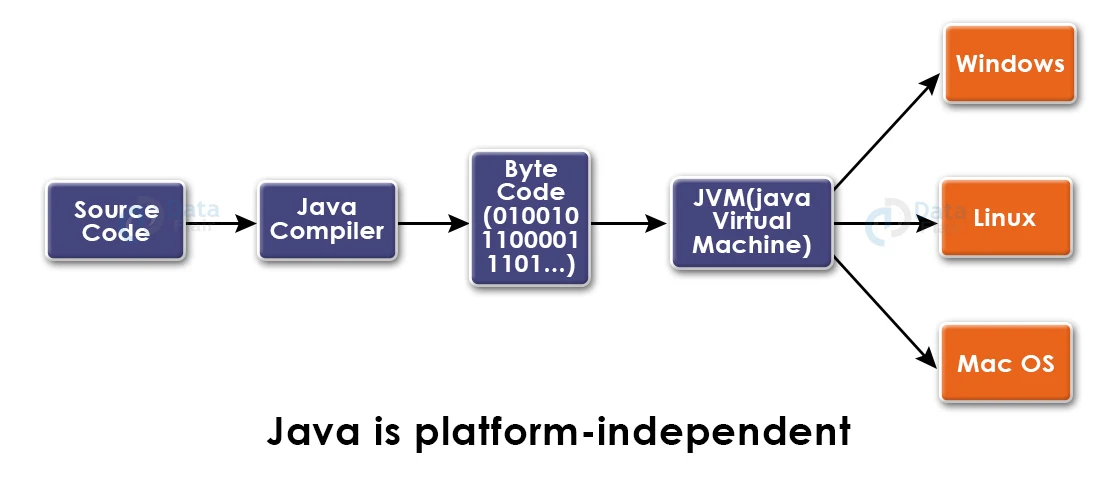
5. Java is platform-independent
Java follows the feature of WORA(Write Once, Run Anywhere). The Java programs written in a system can be run on any other system that has Java in it. The compatibility of Java does not depend on the OS or hardware; this makes Java platform-independent and super flexible.
6. Java is a High-Level Programming Language
Java programs are written in a high-level language, i.e, human language. It is similar to English, with a few syntaxes that are simple and easy to remember. Java has an interpreter that interprets the code to machine-level language for the machine to comprehend.
7. Java supports the portability feature
Java is a highly portable language. This is because Java is platform-independent as well as does not require any special hardware to run. This makes Java literally compatible with almost every possible device.
8. Java Provides Automatic Garbage Collection
In C or C++, we had to free space through the program. In Java, the JVM automatically manages the memory. So, whenever there is an object that doesn’t refer to any class and needs to be dereferenced, the JVM automatically removes it from the program, so we do not need to write any extra code. Thus, Java supports automatic garbage collection.
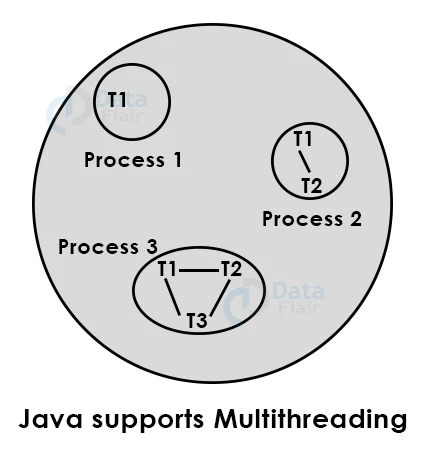
9. Java supports Multithreading
A thread is the smallest possible unit of a process. To gain maximum CPU utilization, multithreading is a key component. Java is a programming language that supports multithreading. We can run more than one thread at a time using Java. They share a common memory to increase the efficiency and performance of the application. Threads run independently of one another.
10. Java is stable
Java receives regular updates to remove bugs. This makes Java one of the most stable programming languages out there. Almost all bugs are removed immediately through updates. That is why it is important to update Java regularly.
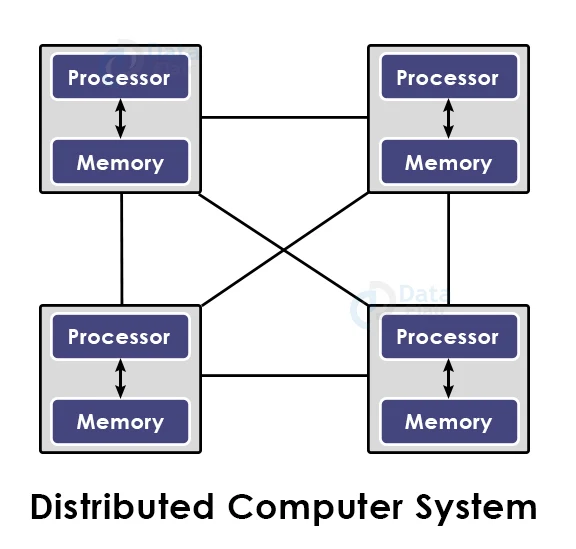
11. Java is a distributed language
Java has the mechanism for sharing data and programs among multiple computers, so it is a distributed programming language. This increases the performance and efficiency of the system.
Java also has support for RMI(Remote Method Invocation), which enables distributed processing in Java. Java can also share objects in a distributed environment as it supports socket programming and the CORBA technology.
12. Java provides an efficient memory allocation strategy
Java divides memory mainly into two parts: the heap area and the stack area. The JVM allocates memory from either of the two parts depending on the requirement. This helps in efficient memory management.
13. Massive Community Support
Java has been there for a long time; it has been able to build a community of developers larger than any other programming language around the world. With the help of this community and Oracle, Java has been a very stable language through the ages. Unlike the new programming languages like C# or R, Java has almost all queries resolved in StackOverflow, which helps developers in debugging their code.
Cons of Java
We saw that Java has several pros, but nothing in this world is perfect. Java has its own share of cons as well. Let us take a look at them individually.
1. Slow and Poor Performance
Java consumes more memory compared to native programming languages like C and C++. Java is also slower compared to them; this is due to the additional work of the interpreter to convert the code into machine language. The JVM performs various backend functions that decrease the speed of the program. As Java supports automatic garbage collection, it runs in the backend continuously, hampering the performance.
2. Poor GUI
Java is considerably backwards when it comes to GUI. The GUI builder in Java is poor and is unable to build a complex UI. There are many frameworks in Java for creating GUIs, like Swing, SWT, JavaFX, JSF, etc. But these frameworks are not developed enough to build complex GUIs. Modern languages like Python, R, C#, etc have better GUI builders.
3. No backup facility
It does not back up your data if there is a hardware failure or if you delete some data mistakenly.
Java has absolutely zero features to back up the data of users. It mainly focuses on the storage of data, but they are not protected with a backup facility.
4. Significant memory space required
Java takes up more memory compared to other programming languages like C and C++. The memory management of Java is poor. Java uses a garbage collector, but it hampers the performance adversely.
5. Verbose and complex code
Java has verbose code, which means that to run a simple code, you need to declare the code explicitly. It makes the Java program longer. Java syntax and its declaration of variables, data types, and functions result in the complex structure of the program.
Sometimes, it becomes hard to remember those complex syntaxes. Due to these reasons, many programmers prefer Python or C++ over Java, as they have relatively simpler sentences.
For example:
A simple input would require us to write two lines of code:
BufferedReader br=new BufferedReader(new InputStreamReader(System.in));
int num = Integer.parseInt(br.readLine());
Whereas the same thing can be written in C using 1 line:
scanf(“%d”,&num);
We can see how Java code can sometimes be a little too complicated for this reason.
6. Paid commercial license
Oracle announced in January 2019 that they will charge a fee for the commercial license of Java 11 and above. Java was free software until then. This caused a lot of worries among programmers because they had to pay fees based on the number of systems to get updates. The general-purpose Java still remains free for use, but for development and to access all features of Java, a fee must be paid.
The table below describes the advantages and disadvantages of Java in short:
| Pros of Java | Cons of Java |
| 1. Simple | 1. Slow |
| 2. Object-Oriented Programming Language. | 2. Poor GUI |
| 3. Secure Language | 3. No backup |
| 4. Economical | 4. More Memory Required |
| 5. Platform Independent | 5. Complex code |
| 6. High-Level Programming Language | 6. Paid Commercial License |
| 7. Portable | |
| 8. Automatic Garbage Collection | |
| 9. Multithreading | |
| 10. Stable | |
| 11. Distributed | |
| 12. Efficient | |
| 13. Massive Community Support |
Keep Your Java Skills Sharp
The world of technology is constantly evolving, and Java is no exception. New libraries, frameworks, and best practices emerge frequently. To stay competitive in the Java job market, dedicate time to continuous learning. Here are some suggestions:
- Explore open-source projects: Contributing to open-source projects allows you to collaborate with other developers, gain exposure to real-world codebases, and stay updated on the latest advancements.
- Follow tech blogs and publications: Subscribe to blogs and publications focused on Java development. This will keep you informed about new libraries, frameworks, and design patterns.
- Attend meetups and conferences: Participating in meetups and conferences is a fantastic way to network with other Java developers, learn from industry experts, and stay current on the latest trends.
- Pursue online courses: Many online platforms offer comprehensive Java development courses that can help you deepen your knowledge and acquire new skills.
Conclusion:
We saw how Java has both advantages and disadvantages. The cons of Java are relatively less when compared to the pros; this is the reason why so many programmers still believe in Java as a superior programming language. It has ruled the world of programming for about 25 years now.
Your 15 seconds will encourage us to work even harder
Please share your happy experience on Google






The content of this write up is educating.