
Arithmetical Assignment Operators in C
In the realm of programming, effectiveness and clarity play pivotal roles. To streamline code and make it more concise, programmers often utilize assignment operators. Among these, arithmetical assignment operators hold a special place. They combine arithmetic operations with assignments, allowing for efficient and cleaner code. In this piece, we will delve into the realm of arithmetical assignment operators within the context of C programming. We will uncover their purpose, how to use them effectively, and the advantages they bring, all while offering simplified examples catered to beginners, ensuring a seamless learning experience.
Understanding Arithmetical Assignment Operators
Arithmetical assignment operators are shorthand notations that perform arithmetic operations and assignments in a single step.
These operators include:
- += (Add and Assign)
- -= (Subtract and Assign)
- *= (Multiply and Assign)
- /= (Divide and Assign)
- %= (Modulus and Assign)
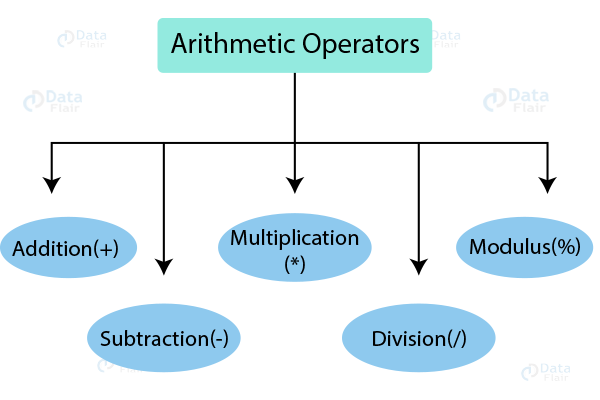
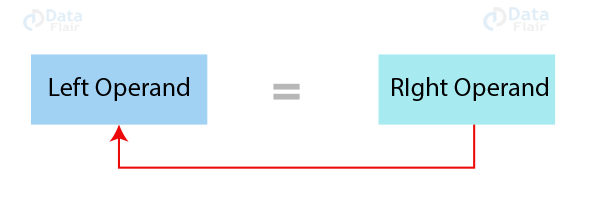
For instance, using +=, you can add a value to a variable without needing a separate assignment statement. Similarly, the other operators work by performing the respective operation and updating the variable’s value directly.
| Operator | Operation | Example |
| + | Addition | X + Y = 42 |
| – | Subtraction | X – Y = -18 |
| * | Multiplication | X * Y = 315 |
| / | Division | Y / X = 7 |
| % | Modulus (Remainder) | Y % X = 0 |
| ++ | Increment (Increase by One) | X++ = 8 |
| — | Decrement (Decrease by One) | X– = 6 |
| Operator name | Operator | Description | Equivalent | Example |
| Basic assignment | = | Assign the value of n to m | N/A | m = n |
| Addition assignment | += | Adds the value of n to m and assigns the result to m | m = m + n | m += n |
| Subtraction assignment | -= | Subtracts the value of n from m and assigns the result to m | m = m – n | m -= n |
| Multiplication assignment | *= | Multiplies the value of m by n and assigns the result to m | m = m * n | m *= n |
| Division assignment | /= | Divide the value of m by n and assign the result to m | m = m / n | m /= n |
| Modulo assignment | %= | Calculates the remainder of m divided by n and assigns it to m | m = m % n | m %= n |
Usage of Arithmetical Assignment Operators
The primary advantage of using arithmetical assignment operators is code simplicity. They reduce the need for separate lines of code for arithmetic operations and assignments. This improves code readability while lowering the likelihood of mistakes brought on by forgotten assignments.
Consider this example:
// Without arithmetical assignment operator
x = x + 5;
// With arithmetical assignment operator
x += 5;
The second approach is not only shorter but also more intuitive, as it directly communicates the intent.
Examples
Let’s explore arithmetical assignment operators through some examples:
Addition:
iint apples = 20;
int eaten = 7;
apples -= eaten; // apples left after eating
Output: The number of apples left after eating is 13.
Subtraction:
int total = 100;
total -= 20; // total is now 80
Output: Total is now 80.
Multiplication:
int quantity = 3;
quantity *= 4; // quantity is now 12
Output: quantity is now 12.
Division:
int dividend = 17;
dividend %= 5; // dividend is now 2
Output: value is now 25.0.
Modulus:
int dividend = 17;
dividend %= 5; // dividend is now 2
Output: dividend is now 2.
#include <stdio.h>

int main() {
    int totalAmount = 100;
    int incrementValue = 25;

    printf("Original total amount: %d\n", totalAmount);

    // Addition assignment
    totalAmount += incrementValue; // totalAmount = totalAmount + incrementValue
    printf("After adding incrementValue: %d\n", totalAmount);

    // Subtraction assignment
    totalAmount -= incrementValue; // totalAmount = totalAmount - incrementValue
    printf("After subtracting incrementValue: %d\n", totalAmount);

    // Multiplication assignment
    totalAmount *= incrementValue; // totalAmount = totalAmount * incrementValue
    printf("After multiplying by incrementValue: %d\n", totalAmount);

    // Division assignment
    totalAmount /= incrementValue; // totalAmount = totalAmount / incrementValue
    printf("After dividing by incrementValue: %d\n", totalAmount);

    // Modulo assignment
    totalAmount %= incrementValue; // totalAmount = totalAmount % incrementValue
    printf("After getting remainder by incrementValue: %d\n", totalAmount);

    return 0;
}
Output:
Original total amount: 100
After adding incremental: 125
After subtracting incrementValue: 100
After multiplying by incrementValue: 2500
After dividing by incrementValue: 100
After getting remainder by incrementValue: 0
These examples show how, depending on the operation, the arithmetical assignment operators change the value of the variable they are applied to.
Common Mistakes and Pitfalls
While arithmetical assignment operators can simplify code, beginners should be cautious about data types. Mixing incompatible data types can lead to unexpected results. Also, remember that the order of operations still matters.
Performance Considerations
In addition to improving code readability, using arithmetical assignment operators can improve efficiency.These operators can be efficiently optimised by contemporary compilers, which lowers memory and computation overhead.
Conclusion
Arithmetical assignment operators are a powerful tool in a programmer’s arsenal. By combining arithmetic operations and assignments, they make code more elegant and efficient. From novice programmers to seasoned developers, anyone can benefit from incorporating these operators into their coding practices. So go ahead, simplify your code and make your programming journey smoother with arithmetical assignment operators in C.
Did we exceed your expectations?
If Yes, share your valuable feedback on Google





