Kali Linux – Vulnerability Analysis Tools
We offer you a brighter future with industry-ready online courses - Start Now!!
Vulnerability evaluation is an essential thing of cybersecurity that entails identifying and addressing safety weaknesses in PC systems, networks, and packages. Vulnerability analysis equipment is critical in helping corporations and protection experts to evaluate, display and mitigate security risks efficaciously.
Kali Linux is one of the maximum well-known and typically used vulnerability evaluation equipment. In this post, we’ll study the numerous Kali Linux vulnerability evaluation tool and their importance to cybersecurity.
What is Kali Linux?
A Linux distribution primarily based on Debian, called Kali Linux, is meant for penetration trying out and digital forensics. It is an open-supply, free-running device with pre-established software, making it best for cybersecurity applications. An extensive range of security tools covered in Kali Linux can be used to discover and take benefit of holes in packages, networks, and computer systems. Worldwide, safety professionals and groups put it to use drastically.
Vulnerability Analysis Tools in Kali Linux
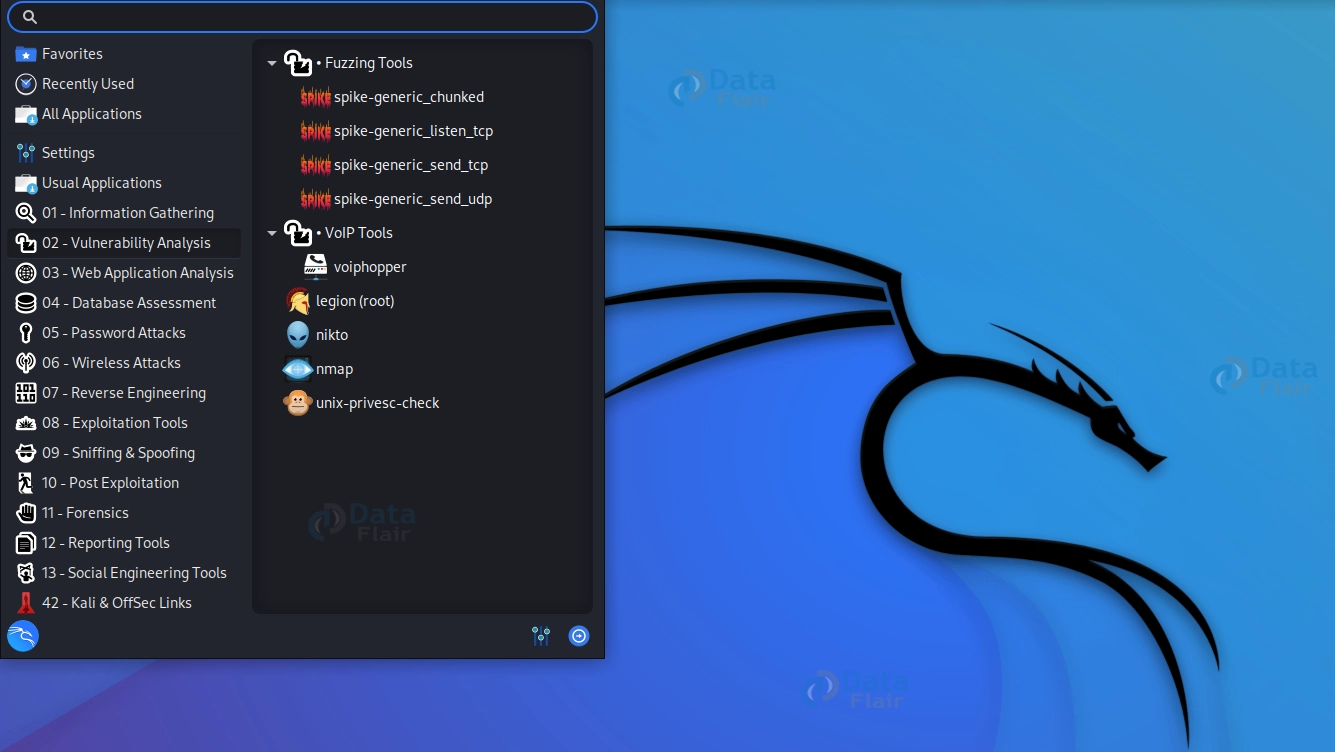
Kali Linux is a robust platform prepared with numerous vulnerability evaluation tools that are useful in identifying and addressing safety vulnerabilities. Some of the tools in Kali Linux include community scanning tools, vulnerability scanners, penetration testing tools, and forensic equipment. These tools are designed to assist security specialists in checking the security posture of computer structures and networks and becoming aware of vulnerabilities that attackers can exploit.
Popular Vulnerability Analysis Tools in Kali Linux
Nessus:
Uses: Nessus is a widespread vulnerability scanner that facilitates picking out and dealing with security flaws in laptop structures, networks, and programs.
Details: Nessus performs complete scans by actively probing the goal environment, studying network offerings, and assessing the security posture. It uses a sizable vulnerability database and affords unique reviews with prioritized recommendations for remediation.
Features: Nessus gives a consumer-friendly interface, superior vulnerability detection capabilities, and aid for compliance exams. It supports various systems and technology, making it suitable for multiple environments.
OpenVAS:
Uses: OpenVAS is an open-supply vulnerability scanner designed to overcome security gaps in networks and pc structures. It enables the identification of vulnerabilities, weak configurations, and capacity dangers to the infrastructure.
Details: OpenVAS performs lively scanning by sending probes and studying the responses from the target structures. It leverages a comprehensive vulnerability database and presents designated reports with severity rankings and remediation recommendations.
Features: OpenVAS gives a bendy and customizable scanning configuration, vast vulnerability assessments, and help for scripting and automation. It integrates nicely with other tools and platforms, making it a powerful desire for vulnerability evaluation.
Nexpose:
Uses: Nexpose is a vulnerability control solution that gives comprehensive scanning and assessment talents for networks, systems, and internet programs.
Details: Nexpose conducts vulnerability scans to perceive weaknesses in networks and systems, specializing in known vulnerabilities and misconfigurations. It gives centralized visibility into safety dangers and presents prioritized remediation recommendations.
Features: Nexpose gives superior vulnerability detection, asset discovery, and reporting features. It provides customizable test guidelines, integration with different protection tools, and complete reporting for compliance purposes.
Nikto:
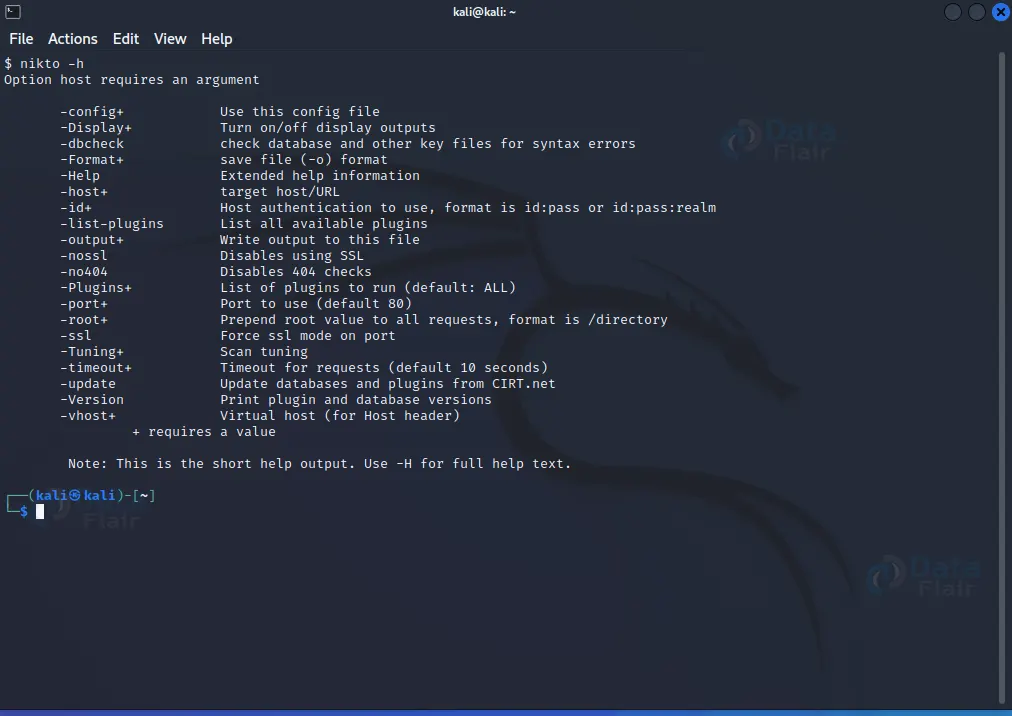
Uses: Nikto is an internet vulnerability scanner that identifies commonplace vulnerabilities, misconfigurations, and previous software on net servers.
Details: Nikto performs complete scans of web servers, testing for over 6700 probably risky files/CGIs, old versions of server software programs, and acknowledged vulnerabilities. It analyzes HTTP response headers, checks for server misconfigurations, and identifies security dangers.
Features: Nikto offers a command-line interface, customization alternatives for test profiles, and giant reporting talents. It supports SSL/TLS scanning, proxy support, and integration with another safety tool.
OpenSCAP
Uses: OpenSCAP is a safety compliance evaluation tool that performs vulnerability scanning, configuration validation, and coverage compliance tests.
Details: OpenSCAP scans systems and environments towards predefined safety guidelines to discover vulnerabilities, misconfigurations, and non-compliance with safety standards. It gives distinct reports with remediation tips.
Features: OpenSCAP supports numerous structures and Linux and UNIX-primarily based systems. It offers a command-line interface and helps automation through scripts. It gives a library of protection rules and supports customization for specific compliance requirements.
Nmap:
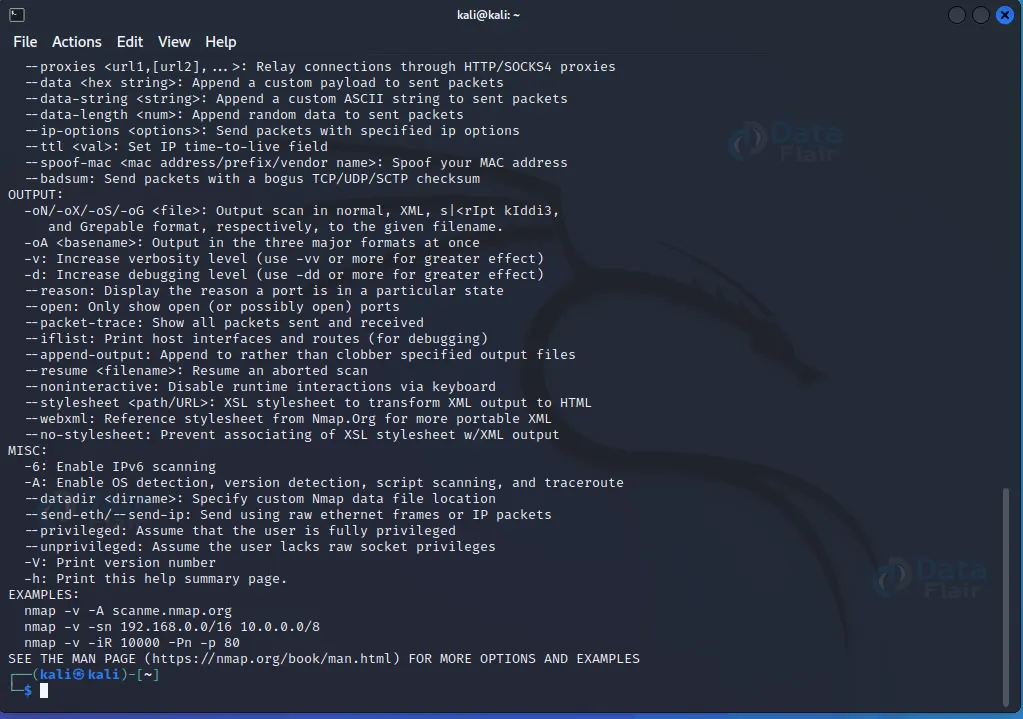
Uses: Nmap is an effective network scanner to discover hosts and offerings on a laptop community. It helps in network mapping, vulnerability evaluation, and safety auditing.
Details: Nmap employs various scanning strategies, which include TCP/IP stack fingerprinting, port scanning, and version detection, to gather information about the goal network. It gives details about open ports, operating systems, and network services.
Features: Nmap offers bendy scanning alternatives, scripting capabilities, and the capacity to detect firewall regulations and evasion techniques. It supports various scan kinds and provides unique output for similar analyses.
Metasploit Framework:

Uses: Metasploit is a practical framework for penetration checking and exploiting development. It assists in figuring out vulnerabilities, testing the effectiveness of security measures, and simulating actual international assaults.
Details: Metasploit provides an extensive collection of pre-constructed exploits, payloads, and auxiliary modules that can be applied to check and take advantage of vulnerabilities in target systems. It helps diverse ranges of penetration checking out processes, including surveillance, scanning, exploitation, and submit-exploitation.
Features: Metasploit gives a person-pleasant command-line interface (CLI) and an internet-based interface known as the Metasploit Console. It helps various exploits, payloads, and post-exploitation modules for specific systems and offerings. Metasploit permits customization and automation via scripting, making it a versatile tool for safety experts.
W3af:
Uses: W3af is a web application security scanner that identifies vulnerabilities in internet packages. It assists in checking out common net-associated protection flaws, including go-website online scripting (XSS), SQL injection, and insecure configuration settings.
Details: W3af performs energetic scanning by crawling the target internet software, analyzing its components, and executing numerous safety assessments. It gives specific reports with records of approximately determined vulnerabilities and hints for mitigation.
Features: W3af offers a graphical user interface (GUI) and a command-line interface (CLI), making it suitable for users with one-of-a-kind preferences. It helps various scanning profiles and allows for personalization primarily based on particular trying-out requirements. W3af additionally integrates with different tools and systems for better capability.
Skipfish:

Uses: Skipfish is an internet application security scanner designed to perceive vulnerabilities and security flaws in web applications and websites. It performs a comprehensive goal analysis, including server-side and consumer-side components.
Details: Skipfish uses static and dynamic analysis techniques to perceive vulnerabilities, such as SQL injection, move-site scripting (XSS), and listing traversal. It generates reports with findings and guidelines for remediation.
Features: Skipfish is known for its speed and scalability, allowing it to address huge web packages efficiently. It supports various structures and technologies, making it versatile for internet environments. Skipfish also provides alternatives for customization and excellent tuning of scanning parameters.
Arachni:
Uses: Arachni is a characteristic-wealthy web utility security scanner to determine web application vulnerabilities. It performs comprehensive scans by studying numerous additives and functionalities of the goal web utility.
Details: Arachni employs an aggregate of black-field trying-out techniques to discover vulnerabilities, inclusive of SQL injection, pass-website online scripting (XSS), and record inclusion vulnerabilities. It presents specific reports with findings, proof, and recommended steps for mitigation.
Features: Arachni helps numerous scanning modes and customization options to conform to specific checking-out necessities. It gives an internet-based total user interface (UI) and a command-line interface (CLI) for ease of use. Arachni additionally supports distributed scanning, considering scalability and green scanning of big internet applications.
These are some vulnerability analysis equipment to be had in Kali Linux. Each tool has its precise uses, capabilities, and capabilities catering to exceptional components of vulnerability assessment and security.
How to Use Vulnerability Analysis Tools in Kali Linux
Using vulnerability analysis tools in Kali Linux calls for a few stages of technical expertise. However, using these technologies correctly is viable when you have the essential understanding and abilities. When using vulnerability analysis equipment, it’s necessary to stick to traditional practices to ensure correct and dependable effects.
Steps on How to Use Vulnerability Analysis Tools in Kali Linux –
1. Identify the target machine or community to be analyzed – The first step in using vulnerability analysis tools in Kali Linux is to discover the target machine or neighborhood you want to investigate. This might be an unmarried host or an entire community.
2. Choose an appropriate device – Several vulnerability evaluation tools are blanketed with Kali Linux, but picking the right one is crucial. Some tools are designed for network scanning, at the same time as others are beneficial for vulnerability scanning or penetration trying.
3. Configure the device – You need to customize the device after deciding on the pleasant choice for your needs. This can also include putting in place test parameters, specifying the target IP cope with or hostname, and choosing the proper scanning mode.
4. Start the test – Once the tool is configured, you may begin the scan. Depending on the size and complexity of the target gadget or community, the experiment can also take some time.
5. Analyze the consequences – You have to examine the test’s findings after its miles are finished to find vulnerabilities that need to be fixed. This might also include reviewing the vulnerabilities detected by the device, prioritizing them primarily based on their severity, and developing a plan to address them.
Best Practices for Using Vulnerability Analysis Tools in Kali Linux –
1. Keep the tool up to date – Vulnerability analysis equipment in Kali Linux is constantly being updated to address new safety threats and vulnerabilities. They should be stored and updated to ensure those tools successfully find and solve safety flaws.
2. Use the appropriate device for the undertaking – Several vulnerability analysis tools are blanketed with Kali Linux. However, picking the proper one for the process is essential. Using the incorrect device may bring about inaccurate consequences and may not cope with the particular vulnerabilities that must be addressed.
3. Follow a scientific approach – Compliance with a scientific technique while using vulnerability analysis tools in Kali Linux is vital. This includes figuring out the goal gadget or network, selecting the precise tool, configuring the device, starting the experiment, and reading the results.
4. Prioritize vulnerabilities primarily based on severity – Not all vulnerabilities are created equal. It’s essential to prioritize vulnerabilities mainly based on their severity and chance of exploitation. This makes it optimistic that the maximum serious flaws are constant first.
5. Use the consequences to improve safety posture – The output of Kali Linux’s vulnerability analysis tools should be applied to decorate the target gadget’s or community’s trendy protection posture. This may include patching vulnerabilities, updating software, or enforcing extra protection controls.
Using vulnerability analysis tools in Kali Linux effectively identifies and addresses computer structure and network safety vulnerabilities. By following high-quality practices and using the proper tools for the undertaking, businesses can decorate their security posture and reduce the dangers of cyber-assaults and facts breaches.
Benefits of Vulnerability Analysis Tools in Kali Linux
Vulnerability evaluation is essential in cybersecurity because it helps corporations identify and deal with vulnerabilities earlier than attackers can exploit. Cybercriminals continuously search for brand-spanking new ways to use holes in PC systems and networks to get admission to private data, scouse borrows intellectual assets, or intrudes with company procedures. A single unpatched vulnerability can make a corporation vulnerable to assault, leading to significant financial losses, reputational damage, and criminal consequences. Utilizing Kali Linux’s vulnerability evaluation equipment, groups can keep beforehand of cyber threats and defend their property from attacks.
Benefits of Using Vulnerability Analysis Tools in Kali Linux
1. Improved Security Posture – Improved security posture is one of the main advantages of employing a vulnerability analysis tool in Kali Linux. Organizations can decrease their publicity of the dangers of cyberattacks and facts breaches by detecting and resolving vulnerabilities. This helps guard touchy information, intellectual belongings, and critical assets.
2. Reduced Risk of Cyber Attacks – Vulnerability analysis equipment in Kali Linux helps agencies stay beforehand of cyber threats by way of identifying vulnerabilities that attackers can take advantage of. By patching those vulnerabilities, agencies can reduce the risks of cyber assaults, shielding themselves from financial losses, popularity harm, and legal liabilities.
3. Enhanced Business Operations – Cyber attacks and facts breaches can disrupt commercial enterprise operations, resulting in downtime, lost productiveness, and revenue losses. Using vulnerability evaluation equipment in Kali Linux, corporations can identify and cope with vulnerabilities that could cause enterprise disruptions. This makes it viable to guarantee the powerful and efficient walking of corporations.
Impact of Vulnerability Analysis on Business Operations and Security
The impact of vulnerability analysis on business operations and safety can’t be overstated. The monetary overall performance, reputation, and felony obligations of an enterprise can all be substantially impacted by using cyberattacks and information breaches.
By using vulnerability analysis tools in Kali Linux, companies can reduce the dangers of cyber-attacks and fact breaches, shielding themselves from the negative consequences of these incidents. This, in turn, facilitates decorating business operations and safety.
Conclusion
In conclusion, Kali Linux’s vulnerability evaluation tools are essential for assisting groups and protection professionals in finding and repairing protection flaws in networks and laptop structures. Kali Linux is ready with several vulnerability evaluation tools which might be beneficial in assessing the security posture of computer systems and networks.
By following satisfactory practices while using vulnerability analysis equipment, organizations can decorate their security posture, lessen the dangers of cyber-assaults and facts breaches, and enhance their overall enterprise operations.
You give me 15 seconds I promise you best tutorials
Please share your happy experience on Google