DevOps Workflow and Principles
DevOps has emerged as a game-changer in the world of software development and IT operations, championing a collaborative and continuous approach to delivering cutting-edge software solutions. The DevOps workflow offers a visual roadmap of actions and outputs, streamlining operations for more efficient development cycles. In this blog, we will delve into the core principles of DevOps, exploring how they drive seamless teamwork, automation, and a customer-centric mindset.
What is DevOps?
DevOps is all about harmonizing application development and operations, erasing the traditional divide between software developers and system administrators. By fostering a culture of collaboration and breaking down barriers, DevOps empowers teams to work together seamlessly. This transformation is supported by cutting-edge tools and methodologies that facilitate the process. As a result, enterprises and software producers can now deploy applications and advanced services more efficiently and effectively to the public.
DevOps introduces innovative approaches and toolsets that streamline software delivery and enhance deployment management.

History of DevOps
The DevOps movement came into existence around 2007 as a response to the challenges faced by the IT operations and software development communities. While agile methodologies had already gained traction for promoting collaboration, developers and operations teams still worked in separate silos. This led to inefficiencies and a lack of cooperation between these critical teams.
DevOps emerged as a solution to bridge this gap and foster better collaboration. It aims to bring together the skills, processes, and tools from both development and operations, encouraging them to work hand in hand towards common goals. By integrating these teams, DevOps enables a more seamless and efficient software development and delivery process.
Benefits of DevOps
DevOps brings a set of valuable advantages to the table, although it’s not a magical fix for all IT challenges. By prioritising collaboration, automation, and agility, DevOps addresses many common pain points experienced by traditional IT organisations.
One of the key benefits of DevOps lies in its ability to accelerate time to market. This means companies can roll out new products and features faster, gaining a competitive edge and yielding a higher return on investment (ROI).
In addition, DevOps focuses on continuously delivering valuable updates, leading to greater user and customer satisfaction. Keeping customers engaged and content contributes significantly to the overall success of a business.
Moreover, DevOps enhances efficiency by automating repetitive tasks and reducing manual errors. This streamlining process allows development and operations teams to concentrate on innovation and strategic initiatives.
Another advantage of DevOps is its emphasis on collaboration, fostering better communication and breaking down silos between teams. When everyone is on the same page, miscommunication is minimised, and productivity flourishes.
Furthermore, DevOps promotes early issue detection and resolution through continuous integration, automated testing, and regular feedback. Proactively addressing problems in their early stages prevents them from growing into more significant and costly issues.
DevOps Culture
DevOps is not just about adopting specific practices; it represents a cultural transformation within organisations. In a DevOps culture, teams embrace a software engineering mindset, workflow, and toolset, where operational requirements are given equal importance as architecture, design, and development. This approach ensures that developers have a deeper understanding of user needs and requirements since they are also involved in running the software they create.
Key values of a DevOps culture include transparency, open communication, and collaboration across teams. By breaking down barriers and promoting teamwork, DevOps enables faster delivery of high-quality software products and services. Embracing a DevOps culture empowers organisations to remain agile, respond quickly to changes, and deliver value to customers more effectively.
DevOps Engineer
When organisations want to implement DevOps, they often seek the expertise of a DevOps engineer. This individual possesses a diverse skill set, combining knowledge of software development and operations along with excellent interpersonal skills to bridge the gaps between different teams.
A DevOps engineer serves as an IT generalist with a wide range of expertise in day-to-day software development, cloud infrastructure management, system administration, and automation.
Always-On Services
In today’s fast-paced digital world, customers expect services that are available and operational at all times. DevOps is highly effective in supporting “always-on” software, including Software-as-a-Service (SaaS) solutions. It reinforces a cycle of continuous deployment, gathering feedback, and promptly addressing incidents or maintenance to ensure services remain operational 24/7.
DevOps Principles
1. Cultivating Collaboration: At the core of DevOps lies a culture of collaboration between development and operations teams. By forming cohesive units, developers and operations professionals synergize their expertise, exchanging feedback throughout the development and deployment journey. The concept of “full stack” development ensures end-to-end responsibilities, fostering the delivery of higher quality outcomes.
2. Harnessing Automation: DevOps firmly advocates automation throughout the software development lifecycle. By automating various processes, developers gain valuable time to focus on coding and implementing novel features. The CI/CD pipeline assumes centre stage in this endeavour, mitigating human errors and boosting team productivity.
3. Pioneering Continuous Improvement: Continuous improvement stands as a cornerstone of DevOps, aiming to optimize speed, cost, and delivery convenience. Fostering an environment of experimentation and waste reduction, DevOps teams consistently push updates that elevate software efficiency and address customer feedback swiftly.
4. Putting Customers First: DevOps practices prioritize customer needs through rapid feedback loops with end-users. Real-time monitoring and agile deployment enable swift user feedback, empowering teams to create products and services tailored to user expectations.
5. Envisioning Success: Successful DevOps entails understanding customer needs and crafting solutions that address real-world problems. Stepping away from assumptions, DevOps teams maintain a comprehensive product understanding from creation to implementation.
DevOps Best Practices
1. Self-Service Configuration: Empowering teams with self-service configuration streamlines development environments, reducing reliance on manual setups.
2. Continuously Building: Regularly building and testing code changes allows for early detection of potential issues.
3. Continuous Integration: Frequent code integration into a shared repository uncovers and resolves integration issues promptly.
4. Continuous Delivery: Automated code deployment to staging or production environments after passing tests ensures swift and reliable releases.
5. Incremental Testing: Breaking down testing into manageable segments facilitates easy bug identification and resolution.
6. Automated Provisioning: Automating development and testing environment provisioning enhances efficiency and consistency.
7. Automated Release Management: Automating release management simplifies and expedites software updates.
DevOps Workflow
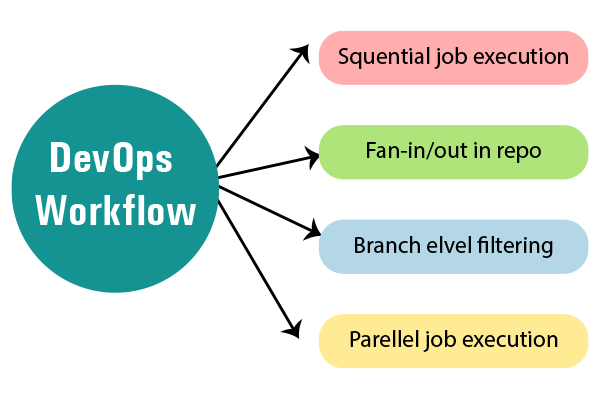
The DevOps workflow is a structured approach to software development that encourages seamless collaboration between development and operations teams.
Key stages in the workflow include:
1. Planning: This initial phase involves collaborative discussions to define project requirements, establish goals, and create a development roadmap. Collaboration tools ensure alignment among all stakeholders.
2. Code Development: Developers collaborate on coding tasks, using version control systems like Git to track changes and facilitate simultaneous contributions.
3. Continuous Integration: The CI phase automates code integration into a shared repository multiple times a day. Automated tests detect and address integration issues, maintaining a stable codebase.
4. Continuous Testing: Automated testing plays a pivotal role in DevOps workflow, ensuring thorough testing across various environments. Swift identification and resolution of bugs reduce manual testing efforts.
5. Continuous Deployment: Successfully tested code changes are automatically deployed to staging or production environments, keeping the software deployable at all times.
6. Monitoring and Feedback: Real-time monitoring provides insights into software performance and user behaviour. User feedback drives further improvements and iterations.
7. Continuous Feedback and Improvement: Emphasising feedback loops, DevOps teams identify areas of improvement, refine processes, and enhance software quality. This feedback-driven approach fosters agility and innovation.
Best Practices for Developing DevOps Workflow
Developing a successful DevOps workflow requires simplicity and clarity as the guiding principles. Keep the workflows concise, ensuring a clear understanding of each phase’s relationship to the next. The goal is to create a straightforward process that all team members can easily follow and collaborate on.
Regular check-ins throughout the process are essential to identify any potential problems and areas that need clarification. Utilizing metrics and performance data helps track the team’s progress over time, enabling continuous optimization in both the short and long term. By keeping track of work and objectives, you can stay on top of their progress and make informed decisions.
To enhance the workflow, carefully analyze each phase individually and as a whole. Ensure that teams have access to sufficient data to work efficiently. For example, improving the layout of incident reports can make the workflow more understandable and adaptable. During automated testing, provide clear outcomes and detailed data to help developers quickly identify and address any issues.
Promote transparency within the team by ensuring everyone understands their roles and responsibilities. Don’t hesitate to provide additional explanations when needed, as it’s better to over-communicate than to assume everyone knows everything. Creating a supportive and collaborative environment fosters a successful DevOps workflow.
Tools that Might be Helpful during DevOps Workflow Process
In the ever-evolving world of DevOps, a plethora of tools is available to streamline processes and foster effective teamwork.
Here are some essential DevOps tools:
1. Git: A versatile distributed source code management tool that empowers developers to effortlessly track and manage their code changes. Git offers the flexibility to switch between different code versions, create branches for parallel development, and optimise workflow options.
2. Lucidchart: A powerful visual workspace that benefits both developers and IT managers by creating clear and comprehensive diagrams of processes, teams, and data. As a DevOps tool, Lucidchart facilitates modelling new DevOps process flows, documenting handoffs, monitoring development progress, and ensuring seamless collaboration.
3. Kubernetes: A revolutionary open-source system and DevOps tool that elevates containerization to new heights. Kubernetes effectively organises containers into logical units, deploys them in clusters, and automates distribution and scheduling, enabling teams to scale projects with ease.
4. Raygun: An application performance monitoring platform that plays a vital role in DevOps. Raygun allows DevOps teams to closely monitor and analyze errors and crash reports. Its capabilities include diagnosing issues, tracing errors back to specific lines of code or functions, and enhancing overall application performance.
Implementing DevOps in the Organisation
Implementing DevOps within your organisation is an exciting and transformative endeavour. If your company hasn’t yet adopted DevOps practices, the prospect might feel overwhelming, considering that it involves not only changing processes but also the entire work culture.
To achieve a successful DevOps adoption, it’s best to approach it in gradual stages, allowing your teams to adapt steadily. One effective way is to build upon an agile foundation, fostering collaboration, iterative development, and continuous feedback. As you progress towards full-fledged DevOps implementation, consider the following step-by-step sequence:
1. Lay the Agile Foundation: Begin by embracing agile methodologies that encourage flexibility and teamwork. This sets the groundwork for a culture of continuous improvement and cooperation between development and operations teams.
2. Embrace Cloud Computing: Leverage the power of cloud services like AWS, which offers a quick and seamless setup without the hassle of manual infrastructure management. Embracing the cloud enables scalability and operational efficiency.
3. Streamline with CI/CD Workflows: Implement continuous integration and continuous deployment (CI/CD) workflows to streamline software development and delivery. Automation of testing and deployment ensures faster and more efficient software releases.
4. Automate Software Deployment: Embrace DevOps automation to boost productivity. By automating manual tasks, container management, and configuration, you can eliminate bottlenecks and speed up the deployment process.
5. Prioritise Automated Software Testing: DevOps advocates for automated software testing to ensure code quality and early issue detection. Automated testing leads to more reliable and stable software products.
6. Strive for Continuous Deployment: Aim for a state of continuous deployment where code is regularly and reliably delivered to production environments. Frequent software releases enhance agility and responsiveness.
Remember that DevOps automation requires proper infrastructure and tooling readiness. Ensure your organisation has the appropriate resources to support a smooth DevOps process at every stage of the development pipeline.
Conclusion
DevOps principles and practices have become instrumental in accelerating software development and delivery processes. By cultivating collaboration, automation, and a customer-centric mindset, DevOps empowers teams to deliver high-quality software efficiently. Embracing the DevOps workflow encourages seamless coordination between development and operations, facilitating continuous integration, testing, and deployment. A culture of continuous improvement and feedback drives agility and innovation, ensuring success in the dynamic digital landscape.
Did you like our efforts? If Yes, please give DataFlair 5 Stars on Google