DevOps Interview Questions and Answers
In the IT sector, DevOps has emerged as a critical approach that enables seamless communication between development and operations teams. DevOps attempts to increase the effectiveness of software development, delivery, and deployment by merging software development (Dev) with information technology operations (Ops). To assist you in succeeding in your DevOps career journey, we’ll share the top 50 DevOps interview questions in this blog and offer succinct responses.
Top Interview Questions
1. Why is DevOps important in the IT sector, and what does it entail?
In order to increase the effectiveness of software development, delivery, and deployment, the DevOps methodology connects development and operations teams. It encourages teamwork, automation, and continuous integration, which speeds up releases and improves cooperation. DevOps is essential in the IT sector because it improves productivity, streamlines processes, and ensures the production of higher-quality software.
2. What are a DevOps Engineer’s main responsibilities?
Utilising DevOps principles, a DevOps Engineer is in charge of creating, deploying, and maintaining software systems. In order to achieve efficient software delivery, they work together with IT operations, developers, and stakeholders. To improve software development processes, DevOps engineers use automation, continuous integration, and continuous delivery (CI/CD) techniques.
3. What core competencies are necessary to work as a DevOps Engineer?
You need to have solid technical experience in IT operations, systems administration, and software development to become a DevOps Engineer. It is frequently necessary to have a degree in computer science or a related discipline, as well as relevant experience and certifications. It is crucial to be knowledgeable with DevOps technologies, scripting, automation, and cloud computing. Effective teamwork also requires strong problem-solving and communication abilities.
4. Explain the concept of Continuous Integration (CI) and its importance in DevOps.
Continuous Integration (CI) is a DevOps practice where developers frequently merge code changes into a shared repository. Automated builds and tests are run on each integration to identify integration issues early. CI promotes collaboration, reduces conflicts, and ensures continuous delivery of reliable software.
5. Can you describe Continuous Delivery (CD) and its role in DevOps?
Continuous Delivery (CD) is an extension of Continuous Integration, focusing on automating the deployment process. It ensures that software is always in a deployable state, allowing for frequent and reliable releases. CD reduces the time between code completion and deployment, streamlining the development and release cycles.
6. What are the benefits of using Docker in a DevOps environment?
Docker is a containerization platform that enables developers to package applications and dependencies into portable containers. In DevOps, Docker simplifies application deployment, promotes consistency, and facilitates scalability. It allows for efficient collaboration between teams and ensures resource optimization.
7. How does Kubernetes contribute to container orchestration in DevOps?
Kubernetes is an open-source container orchestration platform that automates the deployment, scaling, and management of containerized applications. It simplifies container management in DevOps, ensuring high availability, fault tolerance, and auto-scaling. Kubernetes enables smooth application deployment and updates, enhancing overall efficiency and reliability.
8. Describe the role of Jenkins in automating the CI/CD process.
Jenkins is an open-source automation server used for CI/CD. It facilitates code integration, automated testing, and continuous deployment to various environments. Jenkins streamlines development and operations tasks, reducing manual efforts and ensuring rapid and reliable software delivery.
9. How can DevOps ensure security in the software development lifecycle?
DevSecOps integrates security into the DevOps workflow, ensuring secure software development and deployment. Regular security audits, vulnerability scanning, and penetration testing are essential. Strong access controls, encryption, and secure coding practices maintain a secure development environment.
10. What is Infrastructure as Code (IaC), and how does it enhance DevOps practices?
Infrastructure as Code (IaC) is a practice of managing and provisioning infrastructure through code. It enables version control, automated provisioning, and consistency across environments. IaC tools like Terraform and Ansible automate infrastructure management, reducing errors and facilitating faster deployments.
11. Can you shed light on the core principles that drive the DevOps philosophy and how they synergize to boost the efficiency of software development?
DevOps is built on key principles like collaboration, automation, continuous integration, continuous delivery, and monitoring. These principles bring developers and operations closer, automate repetitive tasks, seamlessly merge code changes, and offer timely insights through monitoring.
12. Could you explain the concept of “Infrastructure as Code” and its pivotal role within the DevOps approach?
“Infrastructure as Code” involves managing and provisioning infrastructure through coding and automation. This approach integrates infrastructure setup into the software development process. This alignment simplifies deployment, ensures consistency, and eases environment replication.
13. How does DevOps encourage collaborative efforts between developers and operations teams, and can you provide examples illustrating its practical impact?
DevOps promotes teamwork by fostering collaboration. Developers and operations jointly design deployment pipelines, where code changes are automatically built, tested, and deployed. This minimizes friction, speeds up feedback loops, and facilitates smoother software delivery.
14. How do you handle versioning and release management in a DevOps environment?
Version control systems like Git manages code changes and tag specific versions. CI/CD pipelines automate the release process, ensuring smooth and consistent software releases. Proper versioning and release management enable efficient tracking of code changes and avoid conflicts during deployment.
15. What are the benefits of using microservices architecture in a DevOps environment?
Microservices architecture breaks down monolithic applications into smaller, independent services. It enables agility, scalability, and faster development cycles. DevOps facilitates the deployment and maintenance of microservices, supporting continuous integration and continuous delivery of specific components.
16. Can you elaborate on the significance of version control systems in DevOps practices and their contributions to the development lifecycle?
Version control systems, such as Git, enable tracking code changes, facilitating teamwork, and maintaining code integrity. They empower teams to collaborate on code, experiment with branches, and systematically merge changes. This enhances transparency, reduces conflicts, and ensures a reliable codebase.
17. What sets continuous integration and continuous delivery apart within the DevOps context, and how do they complement each other?
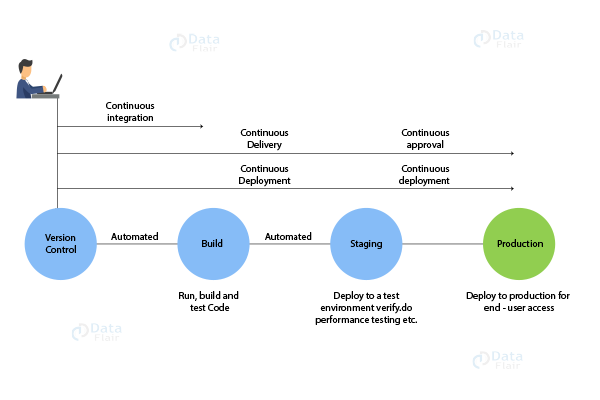
Continuous Integration (CI) involves frequently integrating code changes into a shared repository, followed by automated builds and tests to catch errors early. Continuous Delivery (CD) extends CI by automating deployment to staging environments, ensuring software is always ready for release and reducing manual interventions.
18. How does DevOps handle configuration drift in a large-scale infrastructure?
Configuration drift refers to inconsistencies between different servers or environments due to manual configurations. DevOps practices define and manage infrastructure through code (IaC). Continuous monitoring and automation tools detect and remediate configuration drift, maintaining consistency across the infrastructure.
19. Explain the concept of GitOps and its impact on Kubernetes deployments.
GitOps is an operational model where the entire system state is described in a Git repository. Kubernetes deployments are driven by changes to this repository. GitOps simplifies the deployment process, tracking changes, ensuring consistency, and enabling rollbacks if needed.
20. How do you ensure scalability and high availability of applications in a DevOps setup?
DevOps emphasizes automation and continuous monitoring to ensure scalability and high availability. Auto-scaling in cloud environments adjusts resources dynamically based on demand. Load balancing, fault tolerance, and redundancy strategies ensure application resilience and availability during peak traffic or failures.
21. Could you explain the concept of “shift-left” in the DevOps approach and how it influences quality assurance?
“Shift-left” involves integrating testing and quality assurance processes earlier in the development cycle. This prevents issues from spreading downstream, minimizing costly fixes. Teams conduct unit tests, code reviews, and automated tests early on, enhancing overall software quality.
22. How does the concept of microservices align with the DevOps principles, and what benefits does it offer?
Microservices involve breaking applications into smaller, manageable components that can be developed, deployed, and maintained independently. This aligns with DevOps by enabling continuous deployment, parallel development, and efficient innovation and scaling of specific functionalities.
23. Describe the impact of containerization, particularly using tools like Docker, on streamlining the DevOps workflow.
Containerization abstracts applications and dependencies into lightweight containers, ensuring uniformity across development, testing, and production setups. This simplifies deployment, eliminates issues like “works-on-my-machine,” and fosters seamless collaboration between developers and operations.
24. Describe the importance of monitoring and logging in DevOps.
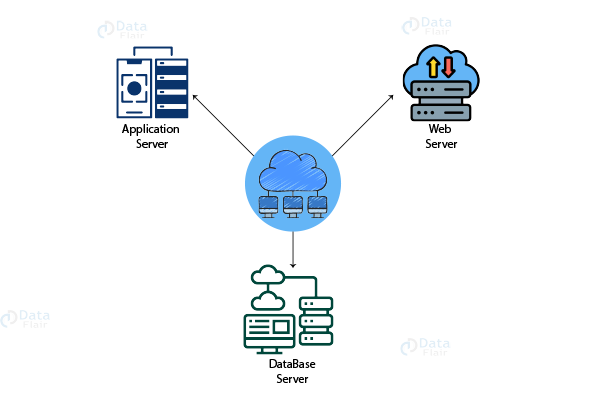
Monitoring and logging provide insights into application and infrastructure health and performance. Monitoring tools track metrics and identify potential issues proactively. Logging allows analysis, error troubleshooting, and data-driven decisions for continuous improvement in DevOps practices.
25. How can DevOps teams leverage automation to streamline processes?
DevOps relies on automation to eliminate manual, repetitive tasks and accelerate development and deployment. Automation tools enable efficient testing, provisioning, configuration management, and continuous integration, leading to faster releases and improved software quality.
26. Explain the significance of Continuous Testing in a DevOps environment.
Continuous Testing involves running automated tests as part of the software delivery pipeline. It provides instant feedback on software quality, reduces production defects, and allows for rapid feedback and iterative development.
27. What are the key elements of Continuous Testing tools?
Continuous Testing tools support various types of testing, including unit testing, integration testing, performance testing, and security testing. They integrate seamlessly with CI/CD pipelines, enabling automated test execution and reporting. These tools provide actionable insights into test results, helping teams identify and resolve issues quickly.
28. How do you handle the challenges of Continuous Integration and Continuous Deployment?
Challenges in Continuous Integration can be addressed by fostering a culture of frequent code integration, ensuring comprehensive test coverage, and leveraging automation to streamline CI. For Continuous Deployment, gradual rollouts, feature flags, and rigorous testing at each stage of the pipeline can mitigate challenges.
29. Explain the concept of “Infrastructure as Code” (IaC) and its benefits.
Infrastructure as Code (IaC) manages and provisions infrastructure through code. It enables version control, automated provisioning, and consistency across environments. IaC reduces manual errors, accelerates deployments, and enhances collaboration between teams.
30. How does “Infrastructure as a Service” (IaaS) contribute to flexible application deployment within the DevOps framework?
IaaS offers virtualized computing resources over the internet, empowering developers to provision infrastructure dynamically. This aligns with DevOps by enabling resource scaling, automated provisioning, and reducing manual infrastructure management tasks.
31. Could you explain the “blue-green deployment” strategy and how it minimizes downtime during software updates?
Blue-green deployment involves maintaining two identical production environments: one active (blue) and the other inactive (green). When updates are ready, traffic shifts from blue to green, minimizing downtime and facilitating easy rollback if needed. This ensures smooth updates and enhances application availability.
32. What are some popular IaC tools, and which one do you prefer?
Popular IaC tools include Terraform, Ansible, Puppet, and Chef. My preferred tool is Terraform due to its simplicity, ease of use, and support for multiple cloud providers.
33. How does DevOps culture promote collaboration between teams?
DevOps culture encourages open communication, knowledge sharing, and breaking down silos between development and operations teams. Collaboration, regular meetings, and joint accountability for project success foster an environment that accelerates the software development lifecycle.
34. Can you explain the difference between Git and GitHub?
Git is a distributed version control system for managing code repositories and tracking changes over time. GitHub is a web-based hosting service for Git repositories, providing additional collaboration and project management features. Git is the technology, while GitHub is a platform that facilitates collaboration and open-source contributions.
35. How do you manage secrets and sensitive data in a DevOps environment?
DevOps teams use tools like HashiCorp Vault or Azure Key Vault to securely store and manage secrets. These tools offer encryption, access controls, and auditing capabilities, ensuring sensitive data remains protected throughout the development and deployment process.
36. What are Blue-Green Deployments, and how do they benefit software deployments?
Blue-Green Deployments involve operating two identical environments – one (blue) for the current production version and another (green) for the new version. Thorough testing in the green environment allows for a seamless traffic switch from blue to green, enabling zero-downtime deployments and easy rollbacks if needed.
37. How do you ensure the security of containers in a Kubernetes environment?
To ensure container security in Kubernetes, it’s crucial to use trusted container images, minimize the attack surface, and implement role-based access control (RBAC). Regularly scanning container images for vulnerabilities and updating container runtimes are essential practices to enhance container security.
38. Explain the concept of “Immutable Infrastructure” and its advantages.
Immutable Infrastructure is an approach where infrastructure is never directly modified after deployment. Instead, changes are made by creating new instances with updated configurations. This guarantees consistency traceability, and eliminates configuration drift, making infrastructure management more straightforward and resilient.
39. What is the role of Chaos Engineering in a DevOps environment, and how does it help?
Chaos Engineering involves deliberately introducing controlled failures and disruptions in a controlled environment to test system resilience and identify weaknesses. In a DevOps environment, Chaos Engineering helps validate system robustness, identify failure points, and enhance the overall reliability and performance of the system.
40. How do you handle rollbacks and fallbacks in a CI/CD pipeline?
Rollbacks in a CI/CD pipeline involve reverting to a previous version of the application when a new deployment encounters issues. Fallbacks refer to switching to a secondary or redundant system in case of failure. Effective monitoring, automated testing, and version control are crucial for seamless rollbacks and fallbacks in CI/CD pipelines.
41. Describe the Blue Ocean plugin in Jenkins and its benefits.
The Blue Ocean plugin is a modern user interface for Jenkins, providing an intuitive and visually appealing way to visualize and manage CI/CD pipelines. It simplifies pipeline creation, offers real-time insights, and enhances the user experience for Jenkins users.
42. What are some popular container orchestration platforms other than Kubernetes?
Besides Kubernetes, Docker Swarm and Apache Mesos are popular container orchestration platforms. Docker Swarm serves as Docker’s native orchestration tool, while Apache Mesos provides container orchestration capabilities as a distributed systems kernel.
43. Can you explain the process of rolling updates in Kubernetes?
Rolling updates in Kubernetes involve gradually updating pods (instances) with the new application version while maintaining high availability and zero downtime. New pods are created, and old ones are replaced in a controlled manner, ensuring a smooth transition.
44. How do you ensure database integrity and consistency in a DevOps environment?
Database integrity and consistency are ensured through regular backups, version control implementation for database schema changes, and the use of database migration tools. Automated testing and staging environments help validate database changes before production deployment.
45. What is the “Infrastructure as Code” (IaC) pipeline, and how does it work?
The IaC pipeline automates the process of provisioning infrastructure using code. It involves defining infrastructure configurations in code, using version control systems, and leveraging CI/CD pipelines to deploy and update infrastructure. The IaC pipeline ensures consistent and reliable infrastructure deployments.
46. How can DevOps practices accelerate software development cycles?
DevOps practices such as automation, continuous integration, and continuous delivery reduce manual efforts and shorten development cycles. Automated testing and deployment enable faster feedback, allowing developers to iterate and release software more rapidly.
47. Explain the concept of “GitOps” and its advantages in Kubernetes environments.
GitOps is an operational model where the entire system state is managed in a Git repository. Kubernetes deployments are driven by changes to this repository. GitOps simplifies the deployment process, providing version history, consistency, and easy rollbacks.
48. How do you handle security and compliance in a DevOps environment?
DevSecOps integrates security and compliance throughout the development lifecycle. Regular security assessments, vulnerability scanning, and adherence to compliance standards are essential. Security-focused code reviews and automated security testing help identify and address potential security issues early.
49. What are some popular CI/CD tools other than Jenkins?
Some popular CI/CD tools other than Jenkins include CircleCI, GitLab CI/CD, and Travis CI. These platforms offer robust automation, integration with version control systems, and support for multiple programming languages.
50. How does DevOps foster a culture of continuous improvement?
DevOps encourages a culture of learning, continuous feedback, and blameless post-mortems. Teams regularly analyze failures to identify improvement opportunities, allowing for continuous learning and enhancement of processes.
51. What are the benefits of implementing Infrastructure as Code (IaC)?
Implementing Infrastructure as Code (IaC) offers benefits like version control, automated provisioning, and consistency across environments. IaC reduces manual errors, accelerates infrastructure deployments, and improves collaboration between teams.
52. Can you explain the concept of “GitOps” in Kubernetes?
GitOps is an operational model where the desired system state is stored in a Git repository. Changes to the repository trigger updates to the Kubernetes environment, ensuring consistency, versioning, and easy rollbacks.
53. How does DevOps ensure smooth collaboration between development and operations teams?
DevOps fosters a culture of communication, shared goals, and joint accountability. Regular meetings, cross-functional collaboration, and integrated toolchains facilitate seamless cooperation between teams.
54. What is the importance of automated testing in a DevOps environment?
Automated testing ensures software quality, reduces defects, and provides fast feedback to developers. It allows for faster release cycles and reliable software deployments.
55. How do you handle infrastructure changes in a DevOps environment?
In a DevOps environment, infrastructure changes are managed through version-controlled IaC templates. CI/CD pipelines automate the deployment and update processes, ensuring consistency and reducing manual errors.
56. What is a CI/CD pipeline, and what are its key components?
A CI/CD pipeline is a set of automated steps that build, test, and deploy software changes. Its key components include version control integration, automated testing, artefact storage, and deployment to various environments.
57. How do you manage secrets and sensitive data in a DevOps environment securely?
Secrets and sensitive data are managed using specialized tools like HashiCorp Vault or Azure Key Vault. These tools provide encryption, access controls, and auditing capabilities, ensuring secure storage and management of sensitive information.
58. Can you explain the concept of “Infrastructure as Code” (IaC) and its benefits?
Infrastructure as Code (IaC) is a practice of managing and provisioning infrastructure through code. It allows for version control, automated provisioning, and consistency across environments. IaC reduces manual errors, accelerates deployments, and enhances collaboration between teams.
59. What is the role of Chaos Engineering in a DevOps environment, and how does it help?
Chaos Engineering involves intentionally introducing failures and disruptions in a controlled environment to test system resilience and identify weaknesses. In a DevOps environment, Chaos Engineering helps validate system robustness, identify failure points, and improve the system’s reliability and performance.
60. How can DevOps practices accelerate software development cycles?
DevOps practices like automation, continuous integration, and continuous delivery reduce manual efforts and shorten development cycles. Automated testing and deployment enable faster feedback, allowing developers to iterate and release software more rapidly.
Conclusion
DevOps has emerged as a powerful force in modern software development, transforming the way teams collaborate, deploy code, and deliver value to customers. By embracing DevOps principles and adopting relevant tools, organizations can achieve faster, more reliable software development and stay ahead in today’s competitive landscape. The journey to DevOps excellence is an ongoing one, with continuous improvement and innovation at its core.
Did you like this article? If Yes, please give DataFlair 5 Stars on Google