DevOps Architecture
Effective software delivery is essential for organisations to maintain their competitiveness in the fast-paced digital environment of today. In order to promote cooperation, automation, and continuous delivery of high-quality software solutions, the field of DevOps Architecture offers a strategic framework that unites development (Dev) and operations (Ops) teams, tools, and processes. In this post, we’ll go into the details of DevOps Architecture, looking at its definition, essential elements, and how it helps businesses release software seamlessly.
Understanding DevOps Architecture
DevOps architecture is a comprehensive structure that unites teams from the development and operations departments to speed up the delivery of software. DevOps Architecture enables organisations to achieve faster time-to-market, increased collaboration, and higher software quality by removing the silos between these formerly distinct divisions.
Core Components of DevOps Architecture
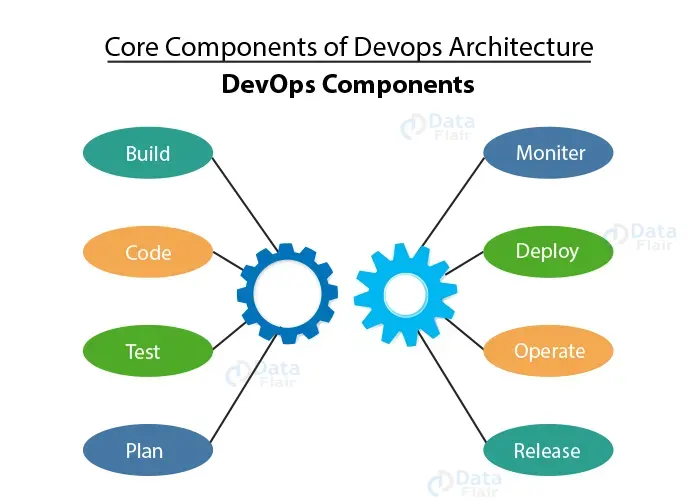
a. Build
The code is compiled and packaged during the build process so that it may be deployed. It entails activities like making artefacts, constructing binaries, and managing dependencies. Effective and repeatable builds are made possible by automation solutions like build servers and continuous integration platforms.
b. Code
The creation of the software itself is the main emphasis of the code component. Coding, version control, and the integration of different modules or components are some of the tasks included. The usage of automation tools and best coding practices helps to guarantee the effectiveness, maintainability, and quality of the code.
c. Test
Testing is essential for confirming the functioning, efficiency, and security of the software. Unit testing, integration testing, and system testing are just a few of the several forms of testing that make up the testing component. Practises such as test automation and continuous testing make it easier to find and fix problems early in the development cycle.
d. Plan
The basis for successful software delivery is laid at the planning stage. It entails establishing the project’s goals and requirements, as well as developing a development and deployment roadmap. During this phase, efficient project management, requirement collection, and clear communication are essential.
e. Monitor
Monitoring is essential for preserving the functionality and health of the software. It entails gathering and studying information about user behaviour, logs, and system metrics. Tools and procedures for monitoring assist in finding bottlenecks, spot irregularities, and enable proactive correction.
f. Deploy
The software release into the production environment is the main goal of the deploy component. It entails tasks including infrastructure setup, configuration management, and packaging. Software releases can be frequent and dependable thanks to continuous deployment practices, which are made possible by automation and release management systems.
g. Operate
In the production environment, the software’s smooth operation is ensured by the operating component. It entails tasks including logging, performance optimisation, monitoring, and responding to user input. For smooth operations, proactive monitoring, automatic incident response, and good team communication are necessary.
h. Release
Deploying the tested software program to operational settings constitutes the release phase. This entails preparing the application for deployment, establishing deployment settings, and packaging it.
Features of DevOps Architecture
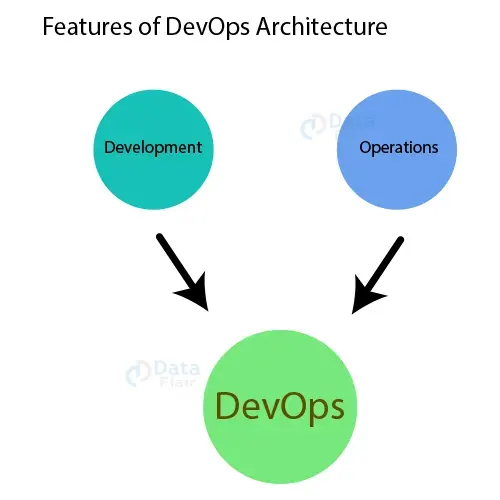
Throughout the software development and delivery process, collaboration, automation, and efficiency are encouraged by a number of essential aspects that define DevOps design.
1. The foundation of DevOps architecture is automation. DevOps teams may drastically reduce time consumption and boost productivity by automating repetitive and manual processes. Code updates are properly checked and swiftly and reliably sent to production thanks to automated tests, continuous integration, and deployment pipelines. Automation also helps find and repair defects early in the development cycle, producing software of higher quality.
2. The culture of cooperation and teamwork between the development and operations teams is fostered by DevOps. DevOps teams collaborate to achieve shared objectives by dismantling organisational silos and encouraging open communication. This cooperative strategy enhances ownership and accountability, resulting in quicker and more effective deployments.
3. Integration: A crucial component of the DevOps architecture is integration. Building a united and cohesive system, it entails seamlessly integrating apps with other environmental elements. To make sure that code updates are continuously included in the main branch and tested for any potential issues, continuous integration and testing are used. Operational issues are posed by frequent releases and microservices, but continuous integration and delivery address these problems by enabling quick and dependable releases.
4. Configuration Management: Configuration management ensures that the application interacts only with the specific resources required for its environment. External configurations are separated from the application’s source code, making it easier to manage and deploy applications across different environments. Configuration files are created outside the application, and depending on the runtime environment, they are either written during deployment or loaded at runtime. This separation of configurations enhances flexibility and adaptability.
5. Continuous Monitoring and Feedback: DevOps architecture emphasizes continuous monitoring of applications and infrastructure in real-time. By collecting and analyzing data, DevOps teams gain valuable insights into system performance, user behaviour, and potential issues. Continuous monitoring provides actionable feedback, enabling teams to make informed decisions and continuously improve their systems.
6. Scalability and Resilience: DevOps architecture emphasizes scalability and resilience to handle varying workloads and ensure high availability of services. Infrastructure as Code (IaC) allows teams to define and manage infrastructure in a declarative manner, making it easier to scale resources up or down as needed.
7. Security and Compliance: Security is a critical aspect of DevOps architecture. DevOps teams implement security measures throughout the development and delivery pipeline to ensure the safety of applications and data. Automated security testing, code reviews, and continuous monitoring help identify and address security vulnerabilities.
Best Practice Tools in DevOps
Collaboration, automation, and continuous integration and delivery are key components of the DevOps methodology. Organisations rely on a variety of strong tools to successfully execute DevOps. Here are a few best practises tools that are essential to building a successful DevOps phase:
1. Git: Git is a crucial component of contemporary software development. It is a well-liked distributed version management system that is free and open-source. Teams can easily manage many branches, collaborate effectively, and track changes to their code thanks to Git. It is essential for DevOps teams since it can save source code and offer a clear history of project development.
2. Jenkins: For CI/CD, Jenkins is a crucial tool. It provides a robust ecosystem of plugins, making it highly adaptable to different development environments. Teams can find and repair errors early in the development cycle because to Jenkins’ automation of the build, test, and deployment processes.
3. Docker: The distribution and deployment of apps have been completely changed by Docker. Applications and their dependencies are packaged into a single unit via containerization, making them portable and simple to administer. Docker guarantees consistency across a range of environments, removing the infamous “works on my machine” problems.
4. Selenium: A popular testing framework for web applications is Selenium. It enables programmers to build trustworthy and dependable automated tests that guarantee the effectiveness and quality of online applications. Selenium is a good option for DevOps testing due to its multi-browser interoperability and cross-language support.
5. Puppet: Puppet automates the administration of infrastructure code and is a potent configuration management solution. It enables DevOps teams to design infrastructure as code, simplifying the provisioning and consistent management of resources. The automation features of Puppet speed up software delivery while retaining security and dependability.
6. Ansible: Ansible is a well-liked configuration management solution that is renowned for being straightforward and user-friendly. Its declarative operation makes it perfect for automating the deployment and configuration of applications. The management of extensive and varied infrastructure is made easier by Ansible’s agentless architecture.
7. Kubernetes: Kubernetes is a well-known open-source technology for container orchestration. It offers automation for containerized application deployment, scaling, and management. Developers may abstract away infrastructure concerns with Kubernetes, facilitating easy deployment across many settings.
8. Terraform: For managing infrastructure as code, Terraform is a useful tool. For deploying resources across diverse cloud services, it offers a consistent CLI. For DevOps teams, Terraform is a must-have solution since its automated provisioning helps prevent human error and assures a precise workflow.
Conclusion
A potent strategy, DevOps Architecture speeds up software delivery, encourages teamwork, and boosts productivity. Plan, Code, Build, Test, Deploy, Operate, Monitor, and Collaborate are its basic components, and by understanding and putting them into practise, organisations may improve their time-to-market, produce software that is of higher quality, and satisfy their customers more. Begin a transformational journey towards optimised software delivery by embracing DevOps architecture.
In the next articles, we’ll go more deeply into particular facets of DevOps Architecture, giving you useful tips and best practices to help you better grasp this fast-paced industry.
If you are Happy with DataFlair, do not forget to make us happy with your positive feedback on Google