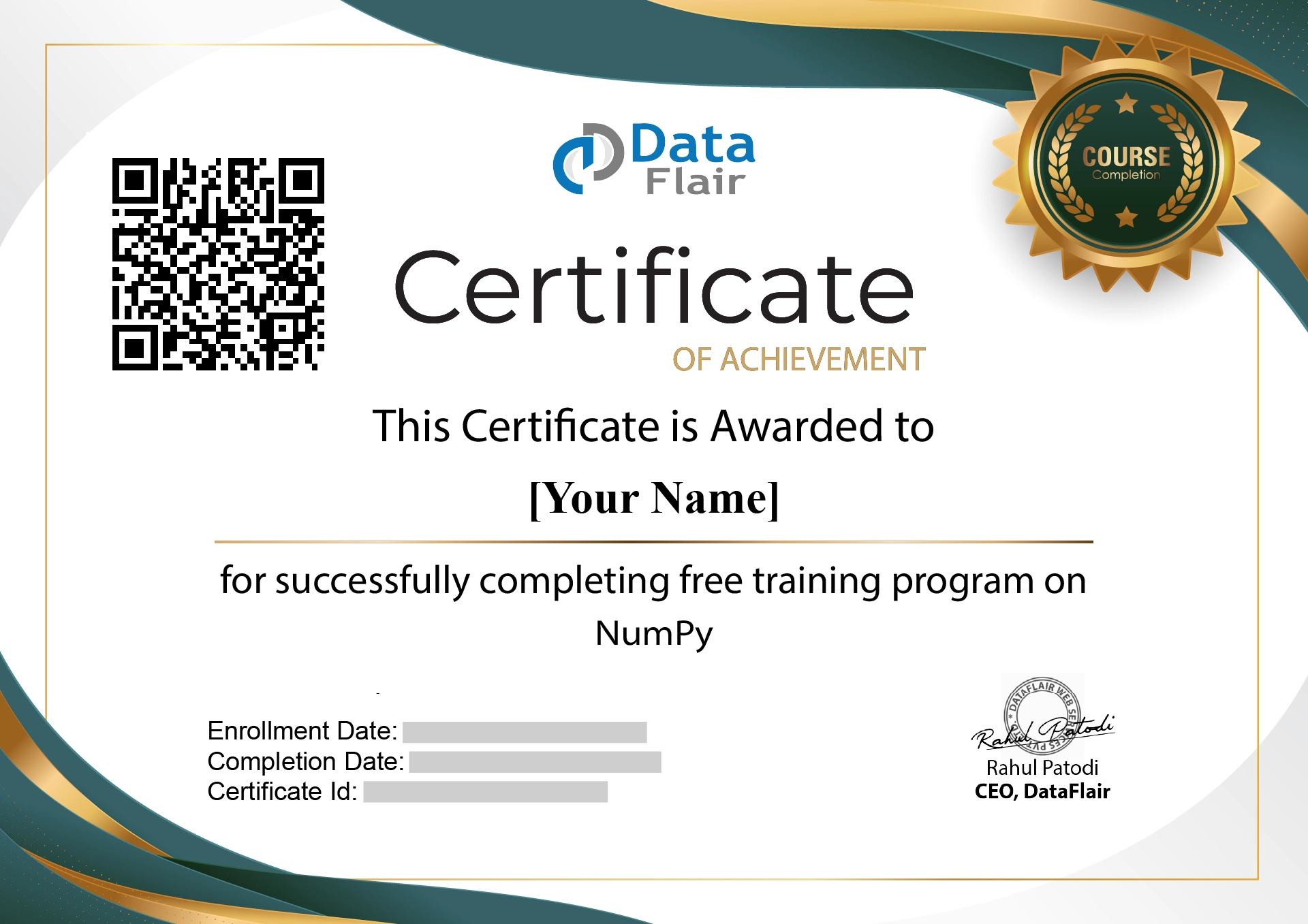
Free NumPy Course for Beginners with Certificate [English]
“Never stop exploring your potential—one small step can lead to a huge transformation.”
Our instructor was approachable and patient. They addressed everyone’s doubts and simplified tough ideas with real-world references…Read more

Tanishque Agrawal 
Executive Research & Development at CG Power and Industrial Solutions Limited
“How DataFlair TechVidvan helped with my Final Year Placement”
As a Computer Science graduate, I had a fair knowledge of programming, but Full Stack Development was very different. I needed structured guidance, hands-on exposure, and, most importantly, real-world project experience. That’s when I found DataFlair TechVidvan….Read more
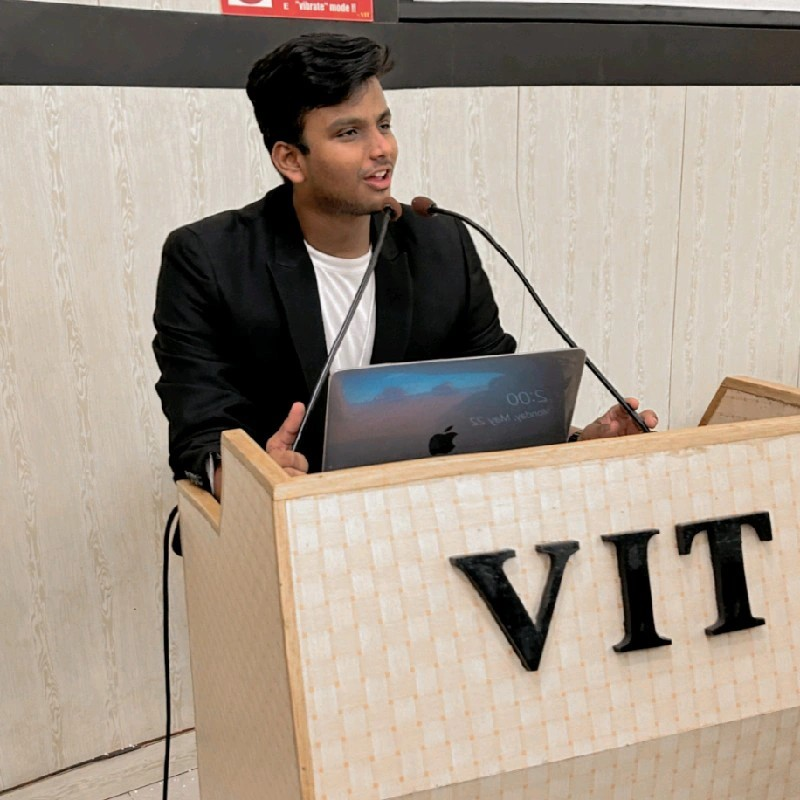
Nihal Mahansaria
Software Engineer at nference
“Cracking the Pre-Placement Offer: My Machine Learning Journey with DataFlair TechVidvan.”
By the time I reached my fourth year, I decided to upskill in Machine Learning, but the real challenge was finding the right approach. I didn’t just want theoretical knowledge; I wanted to get hands on…Read more

Gopi Kiran
Got placed in Course5Intelligence
“How TechVidvan Paved My Path to Nulinz Technology.”
TechVidvan was far beyond my expectations. I have a very structured way of learning. The course curriculum was complete in itself and they focussed more on practicals rather than teaching just theory. The course covered multiple projects…Read more
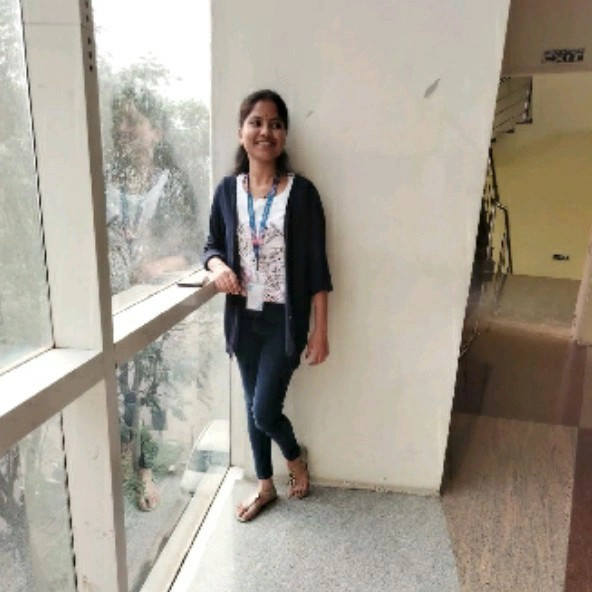
Gayathiri Kumar
Application Developer at Nulinz Technology
“If you wish a bright future ahead, upgrade your skills and shift your career from mainframe to Big Data before its too late.”
I got the best mentor ever who has enriched knowledge of Big Data and the industry. He used to explain all the concepts with real-life examples and after the completion of each topic…Read more

Aniket Singh
Big Data Developer at SmartData Technologies
“Breaking into Tech: My Journey from Learning C/C++ to Becoming a System Engineer at TCS.”
The hands-on approach, expert mentorship, and well-structured course on C/C++ and DSA at TechVidvan caught my attention. I also interned at DataFlair after learning to gain a better understanding….Read more

Satchit R
System Engineer at TCS