AI – Machine Learning Certification Course in Chennai with AI & ChatGPT
- Earn Industry-recognized certification
- Build real-time projects with industry-aligned tools
- Live Interactive sessions from industry veterans
- Updated curriculum designed for AI-era
- Dedicated Job Assistance and Resume Building
Success Stories – They Believed, Learned & Achieved!













Our learners are working in leading organizations
Gain industry-ready skills and earn an official certificate from DataFlair.

Full Stack AI and Machine Learning Course in Chennai Curriculum
- Machine Learning Concepts
- What are the differences it holds from AI?
- Machine Learning Types
- Key ML Terminologies
- Working with NumPy, Pandas & Matplotlib
- Features and Labels in ML
- Training and Testing in ML
- Overfitting vs. Underfitting
- Mathematical Foundations
- Algorithm Survey & Use Cases
- The Machine Learning Workflow
- In-demand Machine Learning Algorithms
- Reinforcement Learning
- Key Categories of Analytics
- Descriptive Analytics
- Diagnostic Analytics
- Predictive Analytics
- Prescriptive Analytics
- Machine Learning in Finance and Banking
- Machine Learning in Retail
- Machine Learning in Healthcare
- Machine Learning in Logistics and Supply Chain
- Machine Learning in the Technology Industry
- Machine Learning in Manufacturing
- Machine Learning in Agriculture
- An Overview on Regression
- Regression Practical Use Cases
- Types of Regression Challenges
- Linear Regression
- Evaluation Metrics
- Common Challenges with Regression
- Linear vs Polynomial vs Ridge vs Lasso Regression
- Regression Industry Applications
- What does Classification mean?
- Regression vs. Classification
- Classification Real-World Uses
- Classification Problems Types
- Data Preparation for Classification
- Label Encoding vs One-Hot Encoding
- Feature Scaling in ML
- Train-Test Split in ML
- Handling Imbalanced Data in Classification
- Model Evaluation Metrics in Classification
- Accuracy in Classification
- Precision, Recall, and F1-Score in Classification
- Confusion Matrix in Classification
- ROC Curve and AUC Score in Classification
- Overfitting & Underfitting in ML
- Regularization Techniques in Classification
- What is k-NN?
- How k-NN Works
- KNN Distance Metrics
- Choosing the Right ‘k’ in KNN
- Data Preparation for KNN
- Categorical Features Handling in KNN
- Strengths and Limitations of KNN
- Evaluation Metrics in KNN
- KNN Model Tuning
- Cross-Validation in KNN for Optimal ‘k’
- Introduction to Decision Tree
- Types of Decision Trees
- Components of a Decision Tree
- Decision Tree Splitting Criteria
- Gini Impurity in Decision Tree
- Entropy & Information Gain in Decision Tree N
- Advantages and Constraints of Decision Tree
- Decision Tree Pre-Pruning and Post-Pruning
- Evaluation Metrics in Decision Tree
- Decision Tree Hyperparameter Tuning
- Cross-Validation in Decision Tree
- Introduction to Random Forest
- Advantages of using Random Forest over a Single Tree
- Understanding Concepts Behind Random Forest
- Random Forest Working Range
- Random Forest Hyperparameters
- Random Forest Advantages and Limitations
- Random Forest Use Cases
- About Unsupervised learning
- Supervised vs unsupervised learning
- Where Unsupervised learning can be used?
- Application of Unsupervised learning
- Popular Algorithms in Unsupervised Learning
- Real-world use cases of Unsupervised learning
- Evaluation Metrics
- Clustering Algorithms Detailed View
- What does Clustering mean?
- Differences Between Supervised and Unsupervised Learning
- Classification vs Clustering
- K-Means Clustering
- K-means Clustering: Real-world industry use cases
- Elbow method in K-means Clustering
- Hierarchical Clustering
- Agglomerative vs Divisive Approach in Hierarchical Clustering
- Hierarchical Clustering: Real-world industry use cases
- Dimensionality Reduction
- Introduction to Enterprise Applications
- Predictive Modeling & Segmentation
- Personalization Engines
- Time Series & Anomaly Detection
- Define Scikit-Learn and what is its importance.
- Attributes of Scikit-Learn for Machine Learning
- Installing Scikit-Learn and Setting Up the Environment
- Understanding the Machine Learning Workflow with Scikit-Learn
- Deep Learning vs Machine Learning
- Deep Learning Outline
- Deep Learning Case Studies in Industry
- Why learn Deep Learning?
- Need for Deep Learning in Industry
- Why is Deep Learning in Demand?
- Main Deep Learning Terminologies
- What does Artificial Neural Networks mean?
- History of Deep Learning
- Uses of Deep Learning
- Convolutional Neural Networks
- Activation Functions in Deep Learning
- Optimizers in Deep Learning
- ResNet50
- Vanishing gradients
- Transfer Learning
- DenseNet121
- Recurrent Neural Networks
- ANN vs CNN vs RNN
- LSTM
- RNN vs LSTM
- LSTM in deep learning
- Deep learning architectures: perceptron, feedforward neural networks
- Activation functions and network initialization
- Backpropagation algorithm and training neural networks
- Deep Learning Optimization techniques: Adam, RMSprop, etc.
- Perceptron & Feedforward Designs
- Activation & Initialization
- Backpropagation & Optimizers
- Learning CNNs for image analysis
- Convolution and pooling layers
- Object detection and image segmentation
- Transfer learning with pre-trained CNNs
- RNN fundamentals: architecture, hidden states, and memory cells
- Long Short-Term Memory (LSTM) and Gated Recurrent Units (GRUs)
- Sequence generation and language modeling
- Applications of RNNs: text generation, machine translation, speech recognition
- Introduction to OpenCV
- Installing OpenCV Using pip
- Setting Up OpenCV in PyCharm
- How to Install and Use OpenCV in PyCharm
- Using imread() and imwrite() Functions to Load and Save Images
- Getting OpenCV Suggestions in PyCharm
- Displaying Images in OpenCV
- Resizing Images with OpenCV
- Rotating Images in OpenCV
- Merging Multiple Images
- Flipping Images Using Bitwise NOT in OpenCV
- Changing Image Colors with cvtColor() in OpenCV
- Capturing Video with OpenCV
- Recording Video from Webcam
- Drawing Lines on Images and Videos
- Drawing Circles on Images
- Adding Text to Images in OpenCV
- Difference Between add() and addWeighted() Functions
- Working with Image Properties (Shape & Size)
- Cropping Images with OpenCV
- Using hconcat() and vconcat() for Image Concatenation
- Blurring Images in OpenCV
- Creating a Graphical Image Rotation App with Tkinter
- Showing Multiple Dynamic Images with Tkinter
- Dynamically Resizing Images Using Tkinter
- Basic Video Operations with Dialog Box in OpenCV
- Resizing Videos and Images with Specified Dimensions
- Drawing Various Shapes in OpenCV
- Applying Image Transformations in OpenCV
- Converting BGR Images to RGB in OpenCV
- Using Different Color Codes in OpenCV
- Detecting Edges Using Canny Edge Detection in OpenCV
- What does Natural Language Processing mean?
- Uses of NLP
- Text Preprocessing
- Text Classification
- Sentiment Analysis
- Guide to Artificial Intelligence
- Overview of Gen AI
- Agentic AI Fundamentals
- Historical evolution: From reactive systems to proactive agents
- Agentic AI Workflows
- Agentic AI Use Cases
- Agent vs. Model vs. Tool: Understanding the distinction
- Comparing Agentic AI vs AI Agents
- Multi-Agent Systems
- Core characteristics of AI agents: autonomy, proactivity, adaptability
- Real-world applications of AI agents
- Agent architectures
- Open-source agent frameworks
Objectives of the AI and Machine Learning Course in Chennai
As this course comes to an end, you will be capable of:
- Understand the Core Concepts of Machine Learning: Learn about it, how it works, and why it’s used in almost every business these days.
- Master Key Machine Learning Algorithms: Get practical experience with popular algorithms like Linear Regression, Decision Trees, K-Nearest Neighbours, and more.
- Work with Real-World Data: Learn how to collect, clean, and prepare unorganised data for building accurate and reliable ML models.
- Develop Practical Problem-Solving Skills: Apply Machine Learning methods to actual scenarios, like sales prediction, customer segmentation, fraud detection, and many more.
- Build and Evaluate Machine Learning Models: Understand how to train models, measure their performance, and improve accuracy using practical tools and libraries like Python, Pandas, and Scikit-Learn.
This best online AI/ML class in Chennai aims to prepare you for the industry by equipping you with job-ready skills.
Why should you learn AI and Machine Learning?
Apart from being a trendy topic, Machine Learning has now become a powerful skill that is highly in demand by employers. ML is backing various works, whether it be fraud detection, customer behaviour prediction, or powering automatic cars, etc.
You will learn the following things in this ML course:
- We start teaching from scratch to advanced concepts of Machine Learning.
- You will get practical exposure to solve real-world challenges, which will increase your confidence.
- We teach industry-ready topics so that you can directly apply them after learning.
- Get better job roles and high salaries after adding Machine Learning skills to your resume.
This Machine Learning training in Chennai is the best to start or boost your career by building real-world solutions.
What is Machine Learning?
Machine Learning is like allowing computers to learn from experiences similar to humans. Rather than providing commands at each step, we feed computers with bulk data and allow them to draw patterns out of it independently. It gets experienced over time and makes better decisions and predicts future outcomes without being explicitly programmed step-by-step.
Machine Learning is not just about code; you are training machines to learn and improve with time. Machine Learning unlocks thrilling and effective opportunities for customer behaviour prediction, fraud detection, or building smart applications.
Want to see how machines can learn and make your life easier? Dive into the technology world with this course.
What to do before you start?
This AI & Machine Learning class in Chennai is designed for eager minds and beginners who are willing to add these skills to their skillset. If you are a college student, a professional looking to upskill, or a complete novice, do not worry, this course will guide you to become a Machine Learning expert.
You will just need the following to learn smoothly through this course:
- Prior programming experience or some knowledge about any programming language, especially Python, can be beneficial.
- Ideas about basic math concepts, such as simple algebra, probability, and basic statistics, are enough. No worries, if you do not know about this, we will guide you when such topics or queries arise.
- For anyone with a problem-solving mindset, this course will be very fun and exciting.
These Best AI & Machine Learning courses in Chennai are designed for beginners, so do not worry if you don’t have any programming experience. We will gradually cover from scratch to advanced-level concepts of Machine Learning.
Who should choose the best AI and Machine Learning training in Chennai?
This course is for everyone willing to gain knowledge about Machine Learning. You don’t need to have expertise in programming or an advanced tech background. Just some basic computer knowledge and a willingness to learn about AI and Machine Learning.
Whether you are a college student and want to give your career an early start, a seasoned professional who wants to upskill, a complete beginner and a fresher, or a person who wants to switch careers in the tech industry, this course is for all of you.
By taking our online AI & Machine Learning course in Chennai, you can expect the following benefits:
- Not just theory, but you will work on projects using real datasets to understand how ML works in real-time situations.
- This course starts from the basics and gradually moves towards advanced topics, so you can join if you are a beginner or have some knowledge.
- Learn the tools and techniques used by professionals in MNCs, such as Python, Pandas, and Scikit-Learn.
- Having Machine Learning in your skillset makes you eligible for various job roles such as Data Analyst, ML Engineer, and AI Specialist.
- Earn a certificate after completing this course to showcase your skills to potential employers.
Jobs after learning this AI and Machine Learning class in Chennai
This Machine Learning training in Chennai will unlock many doors to successful careers with high-paying jobs in various fields such as finance, healthcare, e-commerce, and entertainment.
- Machine Learning Engineer
- Data Scientist
- AI/ML Developer
- Data Analyst
- Business Intelligence (BI) Analyst
- Research Analyst
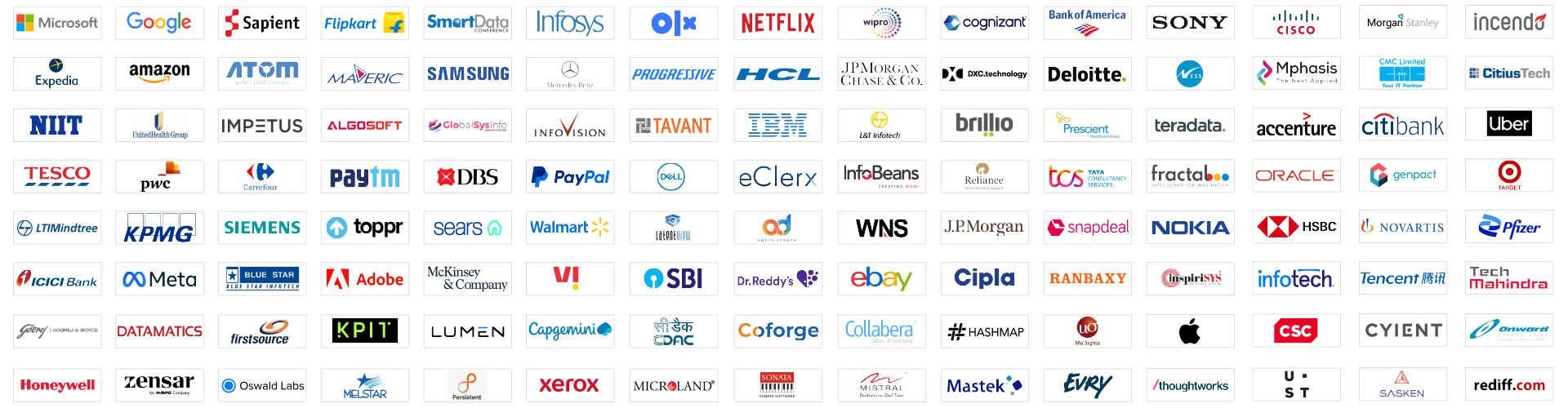
Our students are working in leading organizations
AI and Machine Learning Course in Chennai FAQs
Basic ideas about any coding language, especially Python, can be beneficial through this course, but it is not compulsory. We will cover the coding expertise required for Machine Learning.
Yes! Complete beginners can join this course. As we will cover from scratch and gradually move towards advanced concepts, to ensure that each beginner can learn efficiently.
To learn Machine Learning applications in industries, we will let you work on real-world datasets.
You will gain knowledge about Python, Pandas, NumPy, Scikit-Learn, and basic concepts of data visualization using libraries like Matplotlib.
Yes! You will get an online certificate upon completing the Best Machine Learning courses in Chennai, which can be used to showcase your skills to potential employers.
You will work on practical projects based on predicting house prices, customer segmentation, sales forecasting, and basic fraud detection models.
We tend to explain each concept in a simple way so that students from non-technical backgrounds also understand and learn effectively.
To earn the IBM certification, you will need to enrol in this online AI & Machine Learning certification course in Chennai and complete all the sessions along with projects and assessments. At the end, you will give the exam, and your credentials will be generated to get the IBM certificate from the official website.
This AI & Machine Learning training in Chennai is hands-on, as we provide learning through a practical approach. Here, we explain the theoretical part behind the concepts, but the primary focus is on practical applications.
We help you move forward smoothly throughout your learning journey by providing dedicated support for resolving all your queries.