


Expert-led Online Courses: Elevate Your Skills, Get ready for Future - Enroll Now!
In cybersecurity, penetration testing is crucial in identifying vulnerabilities and ensuring the robustness of an agency’s virtual infrastructure. Professionals often use Kali Linux, a modern-day and adaptable operating device explicitly created for ethical hacking and penetration trying, to carry out such assessments efficaciously.
In this weblog submission, we will explore penetration by trying out Kali Linux, its key features, and how it empowers safety professionals to beautify digital defences.
What is Kali Linux Penetration Testing?
Penetration checking, often called moral hacking, is a scientific and controlled manner of comparing the safety of a network, machine, or application. It involves simulating real-global assaults to uncover vulnerabilities and weaknesses that malicious actors should exploit. By identifying and addressing those safety gaps, groups can make their defences stronger and protect sensitive information.
Meet Kali Linux: The Ethical Hacker’s Swiss Army Knife
Kali Linux is an effective Linux distribution constructed from the floor up for penetration checking out and virtual forensics. It is a versatile platform that gives protection experts comprehensive tools to assess and secure networks, systems, and programs. Kali Linux combines ease of use with considerable capability, making it an international go-to choice for ethical hackers and cybersecurity specialists.
Key Features of Kali Linux for Penetration Testing
1. Vast Toolset:
Kali Linux gives an enormous series of pre-hooked-up equipment especially tailor-made for penetration trying out. This equipment embodies an extensive range of talents, which includes vulnerability evaluation, community scanning, password cracking, wireless evaluation, and much more. Popular gear like Nmap, Metasploit, Wireshark, and Aircrack-ng are only examples of the numerous arsenal within Kali Linux.
2. Easy Accessibility:
Kali Linux offers a user-friendly interface, allowing safety specialists of all levels to navigate and use its tools effectively. The operating gadget is designed to streamline the penetration of trying out procedures and offer a seamless revel for each beginner and experienced practitioner. This accessibility enables customers to pay attention to the challenge hand without the burden of complex configurations.
3. Active Development and Updates:
Kali Linux is a community-pushed challenge with a lively and dedicated development group. Regular updates and frequent releases ensure that security equipment and frameworks are updated, reflecting the ever-evolving nature of cybersecurity threats. This dedication to non-stop improvement guarantees that specialists can rely on Kali Linux as a contemporary platform for their penetration checking out needs.
4. Flexibility and Customization:
Kali Linux gives a high degree of flexibility, enabling users to tailor their surroundings to particular trying out necessities. The system supports customizations, allowing professionals to install extra gear or frameworks primarily based on their alternatives and project demands. This adaptability makes Kali Linux great for extensive penetration testing scenarios.
The key steps involved in the Kali Linux penetration testing procedure:
Planning and Scoping:
- Define the desires and goals of the penetration test.
- Identify the scope of the engagement, along with the structures, networks, and packages to be tested.
- Obtain proper authorization and establish clear communication channels with stakeholders.
Information Gathering:
- Gather applicable information about the target surroundings, IP addresses, domains, network infrastructure, and publicly available records.
- Utilize equipment like Nmap, Shodan, and WHOIS to conduct surveillance and become aware of potential entry factors and vulnerabilities.
Vulnerability Assessment:
- Scan the goal device or community to perceive recognized vulnerabilities and misconfigurations.
- Conduct vulnerability scanning using gear like OpenVAS, Nessus, or Nikto to evaluate weaknesses in offerings, packages, and running systems.
- Analyze the scan effects and prioritize vulnerabilities based on their severity and potential impact.
Exploitation:
- Exploit the recognized vulnerabilities to gain unauthorized get admission to, improve privileges, or manipulate the target device.
- Utilize frameworks like Metasploit to automate exploitation obligations.
- Perform manual exploitation, if required, of custom scripts or gear usage.
Post-Exploitation:
- Maintain access to the compromised system or network while minimizing the impact on the target environment.
- Gather extra facts, including personal credentials, sensitive documents, or community mappings.
- Perform privilege escalation to advantage better levels of getting right of entry to and discovering the extent of management over the goal surroundings.
Reporting and Documentation:
- Compile a complete document detailing the findings, which include vulnerabilities determined, exploited systems, and endorsed remediation steps.
- Communicate the risks related to each vulnerability and provide actionable tips for mitigating them.
- Include evidence, screenshots, and logs to guide the findings and enhance the clarity of the record.
Remediation and Follow-up:
- Collaborate with the employer’s stakeholders to increase a plan for addressing the identified vulnerabilities and weaknesses.
- Assist with implementing endorsed security measures and offer guidance on enhancing the overall safety posture.
- Conduct observe-up checking to verify that the reported vulnerabilities were patched and mitigated.
Remember, penetration testing needs to be conducted ethically constantly and within the authorized scope. It is vital to prioritize communication, professionalism, and a cooperative method during the complete process to ensure an acceptable and productive engagement.
Best Practices for Effective Penetration Testing on Kali Linux
1. Obtain Proper Authorization:
Ensure you have the target machine’s owner’s explicit written consent before starting any penetration checking-out activity. Unauthorized trying out can cause prison effects and damage relationships, so constantly gain proper authorization and define the scope of the engagement.
2. Plan and Document:
Develop an in-depth checking-out plan that outlines the penetration test’s goals, methodologies, and targets. Keep thorough documentation of your activities, findings, and remediation tips. This documentation serves as a reference for destiny analysis and enables monitoring development and ensuring powerful conversations with stakeholders.
3. Stay Current:
Continuously replace your know-how and capabilities by staying knowledgeable about present-day security vulnerabilities, exploits, and strategies. Participate in relevant forums, attend safety conferences, and discover additional resources to beautify your know-how of the evolving threat panorama.
4. Practice Ethical Conduct:
As an ethical hacker, it’s vital to comply with a sturdy code of ethics when carrying out penetration checks. Remain inside the agency’s bounds and avoid inflicting unneeded harm or disturbance to their structures. Maintain professionalism and confidentiality by safeguarding any touchy records obtained throughout the trying-out manner.
5. Use the Right Tools for the Task:
Kali Linux affords an extensive range of equipment; however, it’s vital to pick and use them judiciously based on the particular goals of your penetration test. Understand every tool’s functionalities and capabilities to ensure correct and efficient checking out. Additionally, be privy to any felony restrictions or licensing necessities related to sure tools.
6. Embrace Continuous Learning:
The field of cybersecurity is continuously evolving, and staying ahead of the sport requires a commitment to always getting to know it. Engage in yourself a look at, discover online tutorials, and enroll in professional training publications to enhance your information and abilities. Regularly exercise your powers in safe, managed environments to refine your strategies and keep up with brand-new penetration testing methodologies.
Popular Penetration Testing gear available in Kali Linux
1. Nmap:
a) Uses: Nmap (Network Mapper) is a flexible community scanning tool for host discovery, port scanning, and service enumeration.
B) Details: Nmap uses uncooked IP packets to discover the hosts which might be present in a community, the active services, and other applicable fact (together with OS detection, model detection, etc.).
C) Features:
- Host discovery: Nmap can identify live hosts in a network.
- Port scanning: It can scan for open ports and determine the offerings going for walks on them.
- OS detection: Nmap can identify the working system of the target machine.
D) Basic Commands and Codes:
- Syntax: nmap [options] target
- Example: nmap -p 1-1000 -sV 192.168.0.1
Explanation:
- The syntax starts with the command “nmap” and various options and the goal IP cope with or hostname.
- In the example, the options “-p 1-1000” specify that Nmap must experiment ports 1 to 1000, and “-sV” permits carrier/model detection.
- The goal IP address “192.168.0.1” represents the device or community being scanned.

2. Metasploit Framework:
a) Uses: Metasploit Framework is a powerful exploitation tool used for penetration trying out and vulnerability evaluation.
B) Details: Metasploit Framework offers a wide variety of make-the-most modules, payloads, and auxiliary tools to facilitate penetration, trying out, and simulating real-world attacks.
C) Features:
- Exploit modules: Metasploit gives a massive series of pre-built make the most modules for various vulnerabilities.
- Payloads: It affords numerous loads to supply malicious code to the goal.
- Post-exploitation modules: Metasploit consists of modules for further exploitation after a hit compromise.
D) Basic Commands and Codes:
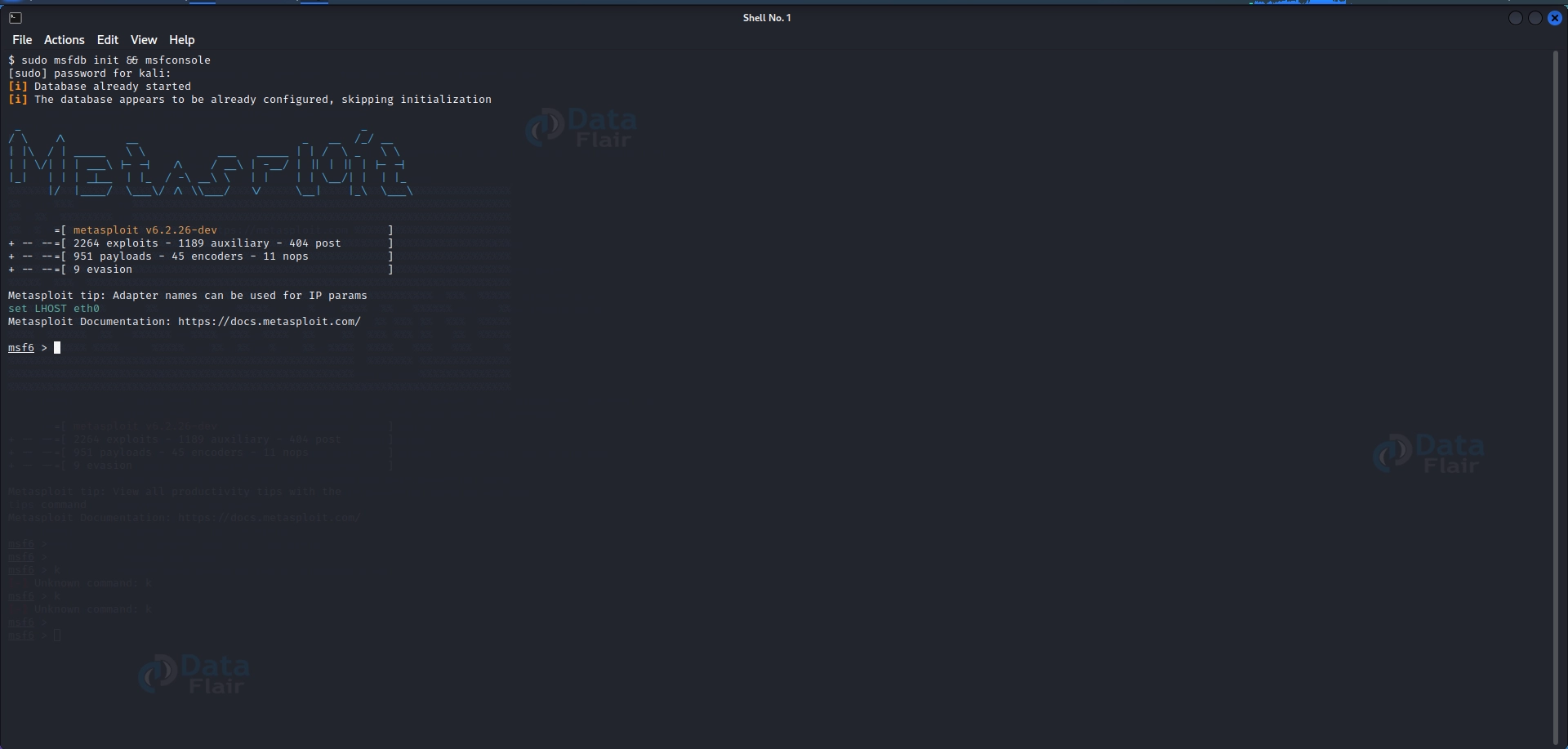
- Syntax: msfconsole
- Example: use exploit/windows/smb/ms17_010_eternalblue
Explanation:
- The syntax invokes the Metasploit Framework with the aid of getting into the command “msfconsole” within the terminal.
- Once inside the Metasploit console, numerous commands and modules may be used to configure and execute exploits.
- In the example, the command “use exploit/windows/smb/ms17_010_eternalblue” selects the EternalBlue exploit module, which targets a specific vulnerability in Windows SMB (Server Message Block) protocol.
3. Burp Suite:
a) Uses: Burp Suite is an internet application testing tool for identifying and exploiting vulnerabilities in web packages.
B) Details: Burp Suite provides a complete set of gear for mapping, analyzing, and manipulating web application traffic.
C) Features:
- Proxy: Intercept and modify HTTP/S site visitors between the browser and the goal net utility.
- Scanner: Automatically identifies common web application vulnerabilities.
- Intruder: Automates attacks, which include brute-forcing passwords or fuzzing parameters.
D) Basic Commands and Codes:
- Syntax: burpsuite
- Example: Intercepting and modifying requests and responses in the Proxy tab.
Explanation:
- The syntax launches Burp Suite by executing the command “burpsuite” within the terminal.
- Burp Suite provides a graphical person interface (GUI) with multiple tabs and capabilities.
- In the example, after launching Burp Suite, the consumer can navigate to the “Proxy” tab to intercept and regulate HTTP/S requests and responses.

4. Wireshark:
a) Uses: Wireshark is a community protocol analyzer for taking pictures and analyzing community packets.
B) Details: Wireshark permits in-depth inspection of captured packets, assisting in becoming aware of network issues and analyzing community protocols.
C) Features:
- Packet shooting: Wireshark can seize packets on various community interfaces.
- Protocol analysis: It provides precise information about protocols used within the captured packets.
- Filtering: Wireshark helps complicated filters to isolate specific network traffic.
D) Basic Commands and Codes:
- Syntax: wireshark
- Example: Analyzing captured packets and applying filters.
Explanation:
- The syntax begins the Wireshark utility by executing the command “wireshark” in the terminal.
- Wireshark opens a graphical interface wherein network site visitors can be captured and analyzed.
- After launching Wireshark, the consumer can analyze the captured packets and follow filters to isolate unique community visitors.

5. Hydra:
a) Uses: Hydra is a password-cracking tool for online and offline password assaults.
B) Details: Hydra supports multiple protocols and can perform brute-pressure or dictionary assaults to crack passwords.
C) Features:
- Multiple protocols: Hydra helps various protocols, which include SSH, FTP, HTTP, and more.
- Customization: It permits customization of the assault parameters, including username lists, password lists, and fee limits.
D) Basic Commands and Codes:
- Syntax: hydra -l <username> -P <password_list> <target> <protocol>
- Example: hydra -l admin -P passwords.txt 192.168.0.1 ftp
Explanation:
- The syntax starts with the command “hydra”, observed with diverse options and arguments.
- In the instance, “-l admin” specifies the username to use for the brute-force attack, “-P passwords.Txt” sets the record containing the password listing, “192.168.0.1” represents the target IP deal with, and “ftp” suggests the protocol to assault (in this example, FTP).

6. SQLMap:
a) Uses: SQLMap is a specialized tool for detecting and exploiting SQL injection vulnerabilities in network applications.
B) Details: SQLMap automates detecting and exploiting SQL injection flaws, allowing testers to extract records from databases.
C) Features:
- Automatic detection: SQLMap can automatically become aware of SQL injection vulnerabilities.
- Database fingerprinting: It can perceive the type and version of the underlying database.
- Data extraction: SQLMap can extract information from the database through exploitation.
D) Basic Commands and Codes:
- Syntax: sqlmap -u <URL> –dbs
- Example: sqlmap -u http://example.com/login.php?id=1 –dbs
Explanation:
- The syntax starts evolving SQLMap via coming into the command “sqlmap” observed with the aid of options and arguments.
- In the instance, “-u http://example.Com/login.Php?Identity=1” specifies the URL of the vulnerable net software and the injection factor, “-dbs” instructs SQLMap to enumerate the to be had databases.

Ethics and Legal Considerations in Penetration Testing:
Penetration testing is an effective tool for assessing and improving the security of digital systems and networks. However, it’s crucial to conduct penetration trying out ethically and inside the boundaries of the law.
Here are some essential moral and legal issues to preserve in thoughts while appearing penetration checking out on Kali Linux:
1. Authorization and Consent:
Before undertaking any penetration checking-out activities, it is critical to obtain the correct authorization and written consent from the owners of the structures or networks being examined. This ensures you have felony permission to perform safety exams on their infrastructure. Testing without authorization is illegal and can lead to severe consequences, including legal movements towards you.
2. Scope of Testing:
Clearly define the scope and boundaries of the penetration testing engagement. Determine the legal belongings and structures for trying out and strictly adhere to those barriers. Unauthorized checking out outdoor the agreed-upon scope might also result in unintentional consequences, along with disruption of crucial services or unauthorized get entry to touchy statistics.
3. Non-Disclosure and Confidentiality:
Respect the confidentiality of touchy statistics received throughout the penetration checking out technique. Maintain strict non-disclosure of facts, vulnerabilities, and any other information that could compromise the safety of the tested structures or networks. Handling all points received during the engagement with utmost care and professionalism is critical.
4. Minimize Damage and Disruption:
Take precautions to reduce any potential damage or disruption triggered at some stage in the testing method. Exercise caution while attempting to take advantage of vulnerabilities and avoid moves that can impact the availability or balance of systems or networks. Prioritize the protection and integrity of the target surroundings.
5. Compliance with Laws and Regulations:
Ensure that your penetration testing activities observe all relevant legal guidelines and industry standards. Familiarize yourself with the felony necessities governing cybersecurity checks and adhere to them. Different areas and international locations might also have specific legal guidelines associated with unauthorized get right of entry, records privacy, and laptop misuse. Stay up to date on legal frameworks and ensure compliance always.
6. Documentation and Reporting:
Maintain thorough and accurate documentation for the penetration checking out engagement duration. Record all sports, findings, methodologies, and gear used. Prepare a comprehensive document outlining vulnerabilities, capability effects, and endorsed mitigation techniques. Share the record only with authorized stakeholders and treat it as sensitive facts.
7. Professionalism and Integrity:
Conduct penetration testing with maximum professionalism and integrity. Adhere to ethical concepts, including honesty, transparency, and respect for others’ rights. Avoid carrying out malicious or dangerous sports at some point of testing and always prioritize the safety and well-being of the goal systems and networks.
8. Continuous Learning and Improvement:
Since the sector of penetration testing is constantly changing, it’s essential to maintain the maximum current procedures, techniques, and regulatory requirements. Engage in continuously gaining knowledge, attending education sessions, and participating in applicable professional groups to decorate your abilities and expertise.
By adhering to those ethical and prison concerns, you could ensure that your penetration testing sports are conducted responsibly, contributing to the overall protection and resilience of the virtual panorama.
Conclusion
Penetration checking out on Kali Linux is an imperative factor of proactive cybersecurity. By using the adequate tools and features supplied by Kali Linux, protection professionals can efficiently become aware of vulnerabilities, secure networks, and shield touchy data. It is crucial to technique penetration checking out with the utmost professionalism, following moral recommendations, and obtaining the correct authorization.
Remember, the objective of penetration checking out isn’t to exploit vulnerabilities for malicious functions but as a substitute to empower organizations to reinforce their defences and defend against real-global threats.
With Kali Linux as your best friend, you may embark on a journey of ethical hacking, safeguarding virtual belongings, and contributing to an extra stable cyber landscape.