


Job-ready Online Courses: Dive into Knowledge. Learn More!
Kali Linux has emerged as one of the maximum powerful and broadly used working structures for penetration, trying out, and moral hacking. With its robust gear and skills, Kali Linux presents security professionals and fans with a platform to evaluate and stable laptop structures. At the heart of this operating device lies the command-line interface (CLI), which offers users unprecedented manipulation and versatility.
In this article, we can delve into the world of Kali Linux commands, exploring essential equipment and techniques to empower customers with the know-how they want to navigate and harness the power of the command line.
Getting Started with Kali Linux Commands
Before diving into Kali Linux commands, it’s vital to recognize the basics. Accessing the terminal in Kali Linux is as easy as commencing the Terminal software. Once inside the command-line interface, customers are greeted with a spark off, eagerly awaiting their commands. Familiarizing yourself with the primary command structure and syntax is essential because bureaucracy is the muse for all instructions you’ll come across.
Furthermore, it is critical to have a draw close of not unusual command-line equipment in Kali Linux. These tools and grep, sed, awk, and more provide practical skills for text processing, pattern matching, and statistics manipulation. Understanding that equipment enables customers to leverage their potential when working with Kali Linux.
Essential Kali Linux Commands
System Information and Management
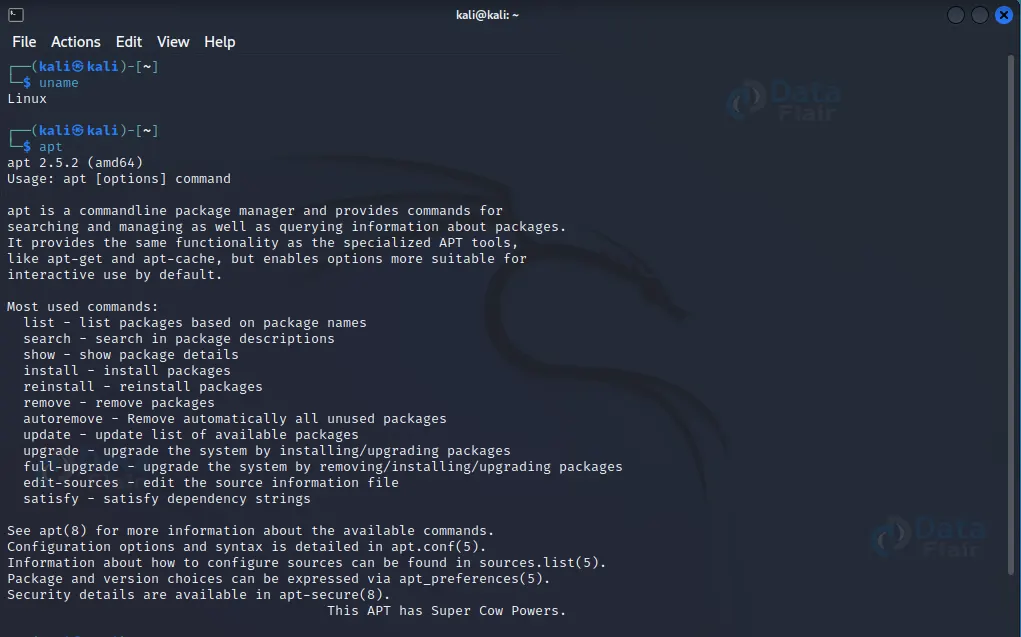
Several instructions are necessary to gain perception of the device and manipulate it efficaciously. The “uname” command allows users to display crucial gadget records containing the kernel model, structure, and operating device info. Meanwhile, the “apt” command allows bundle management and updates, ensuring the system remains current with the ultra-modern protection patches and software program releases. The “systemctl” command also empowers users to control offerings, enabling them to start, prevent, and restart important gadget components.
1. Name- Obtain important gadget facts such as kernel model and structure.
2. Apt – Master the package management gadget for software program installation, updates, and elimination.
3. systemctl – Learn to control offerings, manage startup techniques, and screen gadget conduct correctly.
File and Directory Operations
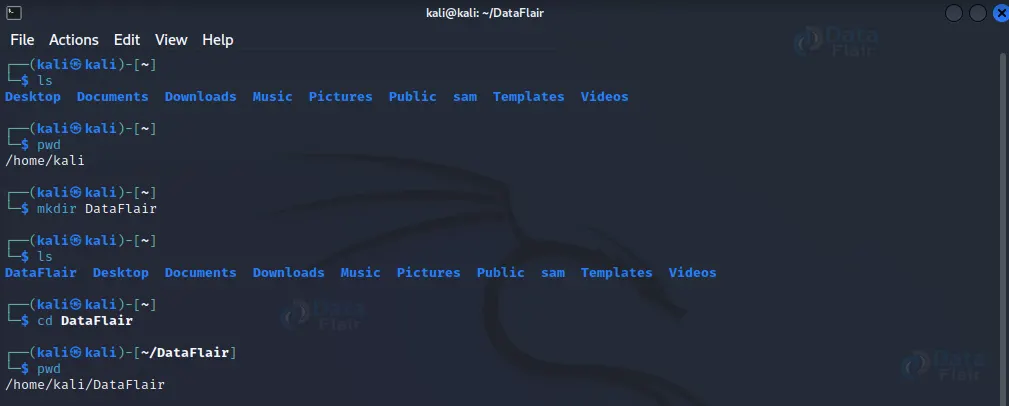
1. ls – Navigate document systems via list documents and directories with diverse alternatives for more advantageous functionality.
2. Cd – Change directories to make admission to distinctive places inside the document system easier.
3. pwd – Determine your present running directory and avoid confusion during document operations.
4. mkdir – Create directories to prepare your record gadget shape successfully.
5. Cp – Duplicate documents and directories, retaining their attributes and permissions.
6. Mv – Move or rename files and directories seamlessly.
Networking and Network Security
1. ifconfig – Configure community interfaces, view IP addresses and manage network parameters.
2. Ping – Test network connectivity and discover capability problems.
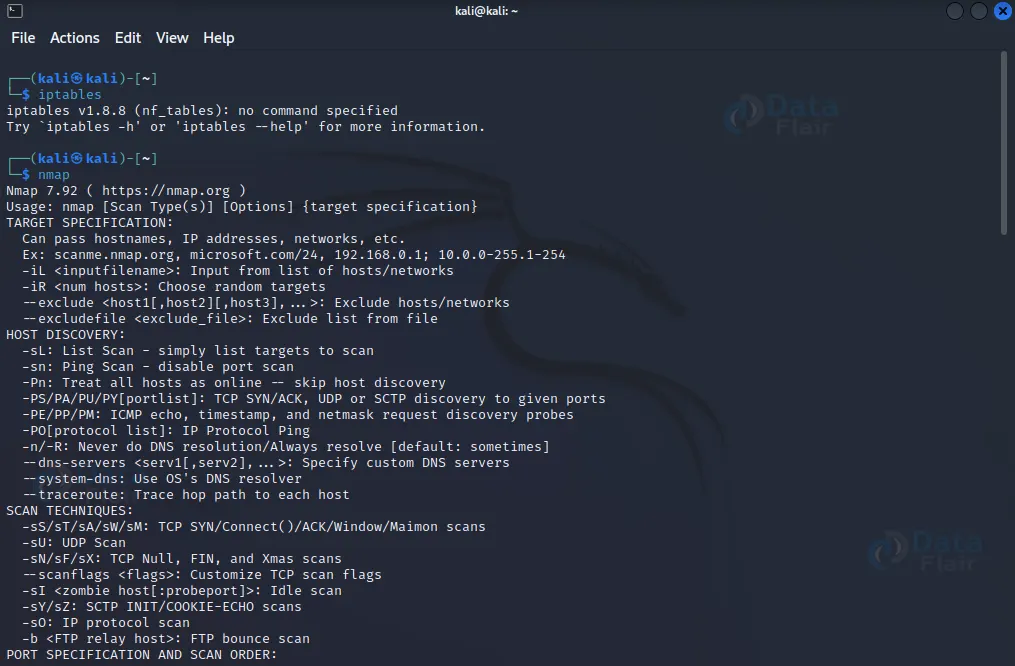
3. Nmap – Perform community exploration and security audits by scanning hosts and services.
4. Netcat – Debug network connections, switch information, and create network proxies.
5. iptables – Configure and manage the firewall to beautify community safety.
System Administration and Security
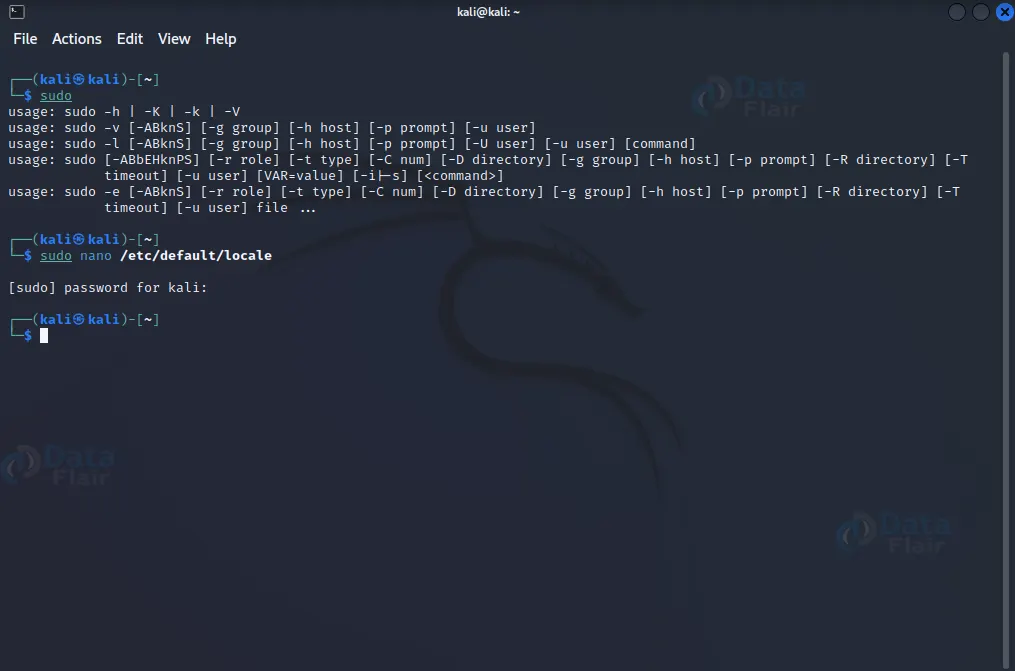
1. su and sudo – Elevate privileges and benefit administrative get admission to execute vital instructions.
2. passwd – Change user passwords securely to keep strong gadget security.
3. useradd and userdel – Manage users correctly, developing or deleting consumer accounts as wished.
4. chmod and chown – Control document permissions and possession to stable, sensitive statistics.
5. Find – Search for documents and directories primarily based on various criteria, facilitating green machine management.
6. Grep – Utilize robust pattern matching and search functionality to extract facts from documents and command output.
Advanced Kali Linux Commands
Metasploit Framework
The Metasploit Framework is an effective tool used in penetration testing and takes advantage of development. At the coronary heart of this framework lies the “msfconsole” command, which affords a command-line interface for interacting with Metasploit’s tremendous functionality. Through the “msfvenom” command, users can generate custom payloads, empowering them to take advantage of vulnerabilities and correctly verify target systems’ safety. Exploits and auxiliary modules may be carried out using the “exploit” and “auxiliary” commands, respectively, permitting users to simulate actual-world assault eventualities and identify potential vulnerabilities.
1. msfconsole – Discover the Metasploit command-line interface to leverage its excellent collection of exploits, payloads, and auxiliary modules.
2. msfvenom – Generate custom-designed payloads to exploit vulnerabilities and benefit manipulation over target structures.
3. Exploit and auxiliary – Execute exploits and additional modules to evaluate and secure networked environments efficiently.
Password Cracking
Password cracking is a crucial skill for protection experts to own, as it permits them to assess the power of passwords and educate users about the importance of strong authentication. Kali Linux gives several pieces of equipment for password cracking, such as the famous “John the Ripper” tool. By using specialized techniques along with dictionary assaults and brute pressure, this device tries to crack passwords, emphasizing the want for sturdy, complicated passwords.
Another outstanding device for password cracking in Kali Linux is “hydra.” This online password brute-forcing tool supports various protocols and offerings, enabling users to carry out centered attacks on authentication mechanisms. Additionally, the “hashcat” command offers advanced password restoration abilities, making use of the strength of GPUs to accelerate the cracking system.
1. John – Employ the John the Ripper password cracker to check the strength of personal passwords.
2. Hydra – Utilize the hydra device to perform online password brute-forcing towards various protocols and services.
3. hashcat – Harness the strength of hashcat for superior password restoration, assisting an extensive range of hashing algorithms.
Wireless Network Hacking
Wireless community safety is an essential location of consciousness for penetration testers and safety professionals. Kali Linux presents several pieces of equipment for auditing wireless networks, assessing vulnerabilities, and reinforcing security features. The “aircrack-ng” command is a prominent device to seize, examine, and crack wireless network packets. It helps an extensive range of wireless adapters and empowers users to evaluate the energy of wireless safety protocols.
For brute-forcing Wi-Fi Protected Setup (WPS) PINs, the “reaver” command proves precious. It automates the technique of locating prone to get admission to points and trying to recover their PINs. The “fern-wifi-cracker” is a graphical device that enables Wi-Fi network analysis. Its user-pleasant interface permits users to perform obligations, including packet seizure, password cracking, and community tracking.
1. aircrack-ng – Audit wi-fi networks, seize packets, and crack WEP and WPA/WPA2 encryption keys.
2. Reaver – Brute-force WPS PINs to take advantage of vulnerable wireless get admission to factors.
3. Fern-wifi-cracker – Utilize the graphical fern-wifi-cracker device for complete wi-fi security evaluation.
Conclusion
We’ve explored various tools and strategies in this complete guide to vital commands in Kali Linux. From system management and document operations to networking, machine administration, and superior penetration testing, Kali Linux gives many instructions to help safety experts and fans.
By gaining knowledge of these commands, customers gain the potential to correctly navigate Kali Linux’s command-line interface, empowering them to perform responsibilities starting from habitual device management to complex penetration trying out eventualities. Additionally, understanding those commands complements the person’s capacity to stable systems.