



Organisations are continuously working to create software that is faster, more dependable, and of higher quality in the fast-paced and fiercely competitive digital landscape of today. This is where DevOps, a software development and operations methodology that emphasises teamwork, communication, and continuous delivery, comes into play. However, the power of automation is necessary to realise DevOps’ full potential. DevOps teams may concentrate their attention on innovation and problem-solving by automating repetitive operations and optimising procedures, ultimately resulting in commercial success.
Now, let’s delve into the key tools and techniques that enable automation in DevOps, empowering organizations to achieve faster, more reliable, and higher-quality software delivery.
Reducing Human Error With Automation
Automating processes like infrastructure provisioning, testing, and code deployment reduces the possibility of expensive outages and security flaws brought on by human error.
Since consistency is guaranteed across environments, it is simpler to spot and fix problems before they become serious.
Continuous Integration (CI): Building and Testing Code Changes
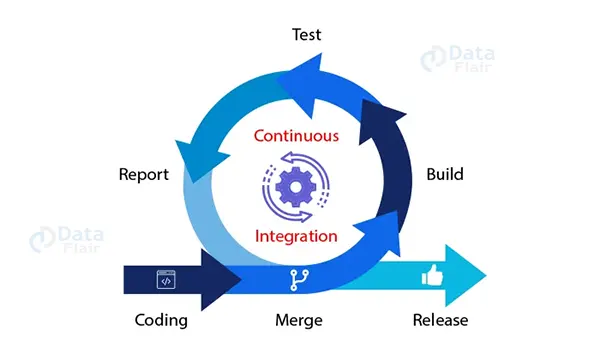
A crucial component of DevOps automation is Continuous Integration.
CI involves creating and testing updated code automatically when it is added to a version control repository like Git.
Jenkins, Travis CI, and CircleCI are examples of well-known continuous integration (CI) technologies that interact with numerous version control systems and offer a variety of plugins and integrations for various programming languages and platforms.
Early detection and resolution of integration problems are advantages of CI, which lowers the possibility of production-level errors.
Continuous Deployment (CD): Automating Code Deployment
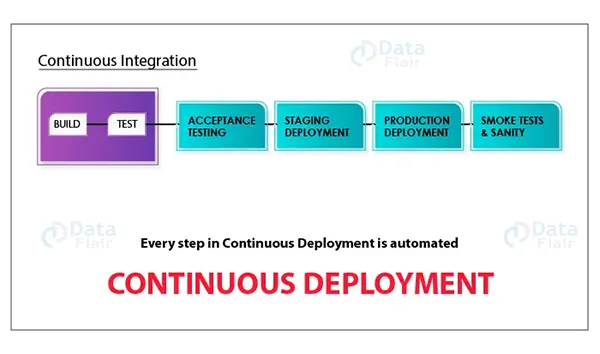
When relevant tests and checks have been completed, code changes are automatically released to production using continuous deployment.
In order to provide controlled and reliable code release, CD systems like Spinnaker, GoCD, and GitLab CI/CD offer pipelines and workflows to automate the deployment process.
Faster release cycles allow organisations to provide customers with new features and issue fixes more quickly, which is one of the advantages of CD.
Infrastructure as Code (IaC): Automating Infrastructure Management
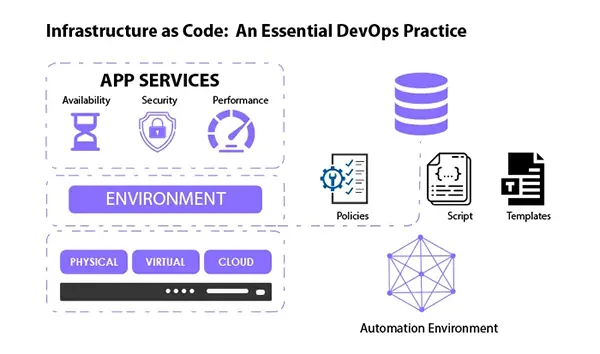
Businesses may automate the provisioning and administration of their infrastructure thanks to IaC.
DevOps teams may version, test, and deploy infrastructure changes similarly to application code by treating infrastructure settings as code.
A variety of modules and connectors are available from tools like Terraform, Ansible, and Chef to assist the automation of infrastructure provisioning and administration across different cloud platforms and on-premises environments.
IaC guarantees consistency across environments, makes updates simple, and allows rollback when necessary.
Monitoring and Logging: Automated Issue Identification
DevOps automation is greatly aided by automated monitoring and logging.
Elasticsearch, Logstash, and Kibana, collectively known as the ELK Stack, offer a robust and adaptable platform for log aggregation and analysis.
Organisations can monitor the performance of their infrastructure and applications in real-time thanks to monitoring tools like Prometheus, Grafana, and Datadog.
Organisations can quickly find and fix problems before they have an impact on customers thanks to automated log collection and analysis.
Embracing DevOps Automation for Success
Organisations can streamline their software development and operations processes, lower the risk of human error, and deliver higher-quality software more quickly by utilising automation tools and techniques like Continuous Integration, Continuous Deployment, Infrastructure as Code, monitoring and logging. The advantages of DevOps automation are as follows:
- Consistency: By bringing consistency to repetitive operations, automation lowers the risk of human error.
- Speed: From code integration through application deployment, automation helps the team work more quickly.
- Reliability: Automation makes a system more stable and dependable, reducing errors caused by misunderstandings.
- Scalability: When managing many applications and environments while ensuring consistency, automated procedures are scalable.
- Data-Driven Decision Making: Automation provides teams with information on end-user product performance, allowing the creation of plans to address problems or faults.
DevOps Culture and the Future
DevOps will continue to evolve and adapt to changing technological landscapes. Some key trends for the future include:
- DevSecOps: To address the growing security threats that enterprises must contend with, security will be incorporated early into the DevOps process.
- Collaboration between businesspeople and DevOps teams will increase as these teams learn to adapt to the digital age.
- Autonomous DevOps Automation: To increase productivity, manual and error-prone operations will be further automated using robotic process automation tools.
- Infrastructure Automation (IA) Advancements: Secure infrastructure for self-service integrations and automation will be provided by infrastructure automation technologies like IaaS or iPaaS environments.
Conclusion
In conclusion, DevOps automation is crucial for businesses looking to improve collaboration, streamline procedures, and quickly produce high-quality software. Businesses can successfully address consumer requests, improve application stability, and find long-term success by embracing automation tools and building a DevOps culture. With security integration, greater collaboration, and cutting-edge automation approaches impacting how businesses approach software development and operations, the future of DevOps holds enormous potential.